


Chiropractic Care for Frequent Travelers: A Guide

A travel day can end before your back and neck loosen up. Long stretches of sitting, limited chances to move, and carrying luggage can leave you stiff or sore, sometimes well after you’ve arrived. Chiropractic care for frequent travelers may be one option to consider, but it isn’t the only step or the right fit for every symptom.
If you’ve finished a trip uncomfortable and still need to work, explore a new place, or get through your usual routine, that frustration makes sense. You don’t have to guess your way through every option. This guide explains how travel routines may contribute to stiffness and offers practical steps to try before, during, and after a trip.
You’ll also learn when an assessment with a local clinician may be worth considering, what to expect from an individualized chiropractic visit, and when symptoms call for medical care instead. The goal is a sensible plan that fits your travel schedule and keeps movement, self-care, and professional advice in perspective.
Table of Contents
Why Frequent Travel Can Leave Your Back and Neck Stiff
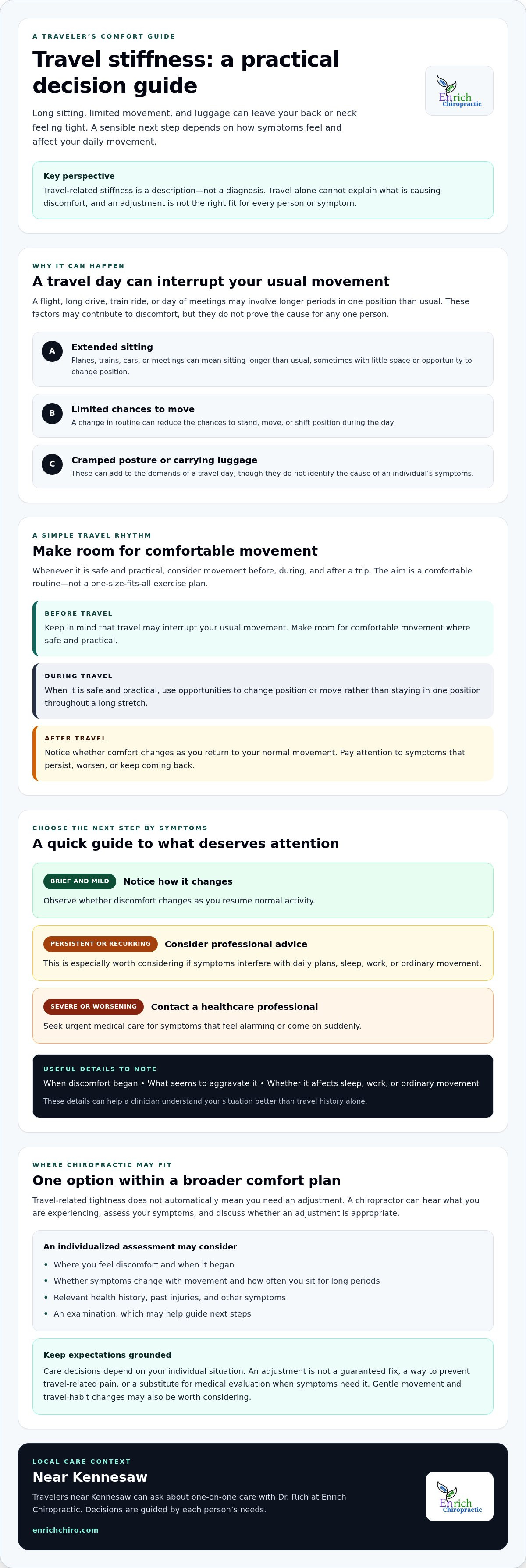
A long trip can interrupt your usual movement and leave your back or neck feeling tight when you stand up. Travel-related stiffness describes a temporary sense of reduced comfort or ease of movement after sitting or staying in one position. It can happen after a flight, a long drive, or a day of meetings. It doesn’t happen to everyone, and stiffness alone doesn’t identify a specific injury or condition.
What travel habits may contribute to back or neck discomfort?
Extended sitting is one possible contributor. On a plane, train, or in a car, you may have little space to change position or may sit longer than usual without a chance to stand and move. A cramped posture or carrying luggage can add to the strain of a travel day, though these factors don’t prove what’s causing discomfort for any one person.
Temporary stiffness may ease as you return to your normal movement. Symptoms that persist, worsen, or keep coming back deserve more attention. Note when discomfort began, what seems to aggravate it, and whether it affects sleep, work, or ordinary movement. This gives a clinician more useful information than the fact that you traveled alone.
Which symptoms should travelers pay attention to?
You may notice a tight back, a sore neck, or less comfortable movement when turning, bending, or standing after sitting. These are descriptions, not diagnoses. A symptom alone can’t confirm a disc, nerve, or joint problem, so avoid drawing conclusions from a travel day or an online search.
Brief and mild: Notice whether it changes as you resume normal activity.
Persistent or recurring: Consider professional advice, especially if it interferes with daily plans or movement.
Severe or worsening: Contact a healthcare professional for guidance. Seek urgent medical care for symptoms that feel alarming or come on suddenly.
Chiropractic care for frequent travelers may be worth discussing if discomfort continues after a trip, but a clinician should consider your reported symptoms and whether an adjustment is appropriate. Chiropractic includes a range of approaches, not a single guaranteed response to travel stiffness. For background on its history and general scope, read this overview of Chiropractic care. Choose your next step based on your symptoms, not just your travel schedule.
How Chiropractic Care May Fit Into a Traveler's Comfort Plan
Travel-related tightness doesn’t automatically mean you need an adjustment. A chiropractor can listen to what you’re experiencing, assess your symptoms, and discuss whether an adjustment is appropriate. That conversation is one option in a broader comfort plan, alongside returning to gentle movement and seeking medical advice when symptoms call for it.
Care should be based on the individual, not a travel-related label: a clinician considers your symptoms, health history, and examination findings before discussing an adjustment. The same approach isn’t right for every traveler with back or neck stiffness.
What may happen during an assessment for travel-related stiffness?
Expect to describe where you feel discomfort, when it began, whether it changes with movement, and how often you travel or sit for long periods. Share relevant health history, past injuries, and any other symptoms. The clinician may examine you and use that information to guide next steps. The assessment and care decisions depend on your individual situation.
When might an adjustment be one option to discuss?
If back, neck, or mobility concerns continue after a trip, you can ask whether an adjustment may be suitable after an individual assessment. Discuss your preferences and any concerns before deciding. An adjustment isn’t a guaranteed fix, a way to prevent travel-related pain, or a substitute for medical evaluation when symptoms need it.
Chiropractic care for frequent travelers is best viewed as one possible part of a practical plan, not a standard response to every long journey. Gentle movement and changes to travel habits may also be worth considering. The World Health Organization’s overview of health risks during travel offers broader travel-health context, but it can’t identify the cause of an individual’s back or neck discomfort.
If symptoms persist or affect everyday movement, consider speaking with a clinician about appropriate next steps. Travelers near Kennesaw can learn about a chiropractic assessment with Enrich Chiropractic. Dr. Rich provides one-on-one care, with decisions guided by each person’s needs.
Chiropractic Care, Movement, or Medical Advice: How to Compare Your Options
The right next step depends on how symptoms behave, how long they last, and whether anything else feels wrong. Mild stiffness after sitting may call for a simple change in position. Ongoing discomfort may justify an assessment. Severe or rapidly worsening symptoms need medical attention, not a wait-and-see approach. A chiropractor can assess symptoms within their scope, but cannot determine every cause of back or neck pain.
When are movement breaks and travel adjustments a reasonable first step?
If discomfort is mild and you can move comfortably, try changing position when practical. Stand and walk briefly during a safe stop, shift how you’re sitting, or try a gentle stretch that feels comfortable. There’s no single exercise routine that suits everyone. Stop any movement that increases pain or brings on new symptoms. The BC Chiropractic Association shares additional tips for preventing back pain during travel.
Making room to move when possible is a sensible first step for some travelers. It can’t guarantee that pain won’t occur, and it shouldn’t replace an assessment if symptoms persist or concern you.
When should a traveler seek medical advice instead?
Use this guide to choose a next step, not to diagnose yourself:
Mild and easing: Gentle movement and comfortable position changes may be reasonable. Stop if symptoms worsen.
Persistent, recurring, or limiting: Arrange advice from a healthcare professional. If you’re considering chiropractic care for frequent travelers, ask for an individual assessment before deciding whether an adjustment is appropriate.
New or alarming symptoms: Seek urgent medical care for loss of bladder or bowel control, numbness around the groin or saddle area, or new or worsening weakness in the legs. These can signal a serious problem. The NHS provides guidance on cauda equina syndrome, a medical emergency.
Also get prompt medical advice for severe pain after a significant injury or symptoms that are rapidly worsening. Don’t delay care to try an adjustment first. Your symptom pattern and personal preference can help guide routine choices, but warning signs take priority. If you’re unsure whether a symptom is urgent, contact a medical professional for guidance.
Simple Ways to Manage Stiffness Before, During, and After a Trip
A few practical choices can make travel feel more comfortable, without promising to prevent stiffness. Adapt these suggestions to your mobility, current symptoms, and any advice from your clinician. Comfort looks different for everyone.
Before you travel
Plan opportunities to move. For a road trip, consider safe stops where you can get out and change position. On a flight or train, think ahead about when it may be practical to stand or walk.
Choose comfort over a “perfect” posture. Arrange your seat and belongings so you can sit comfortably. There isn’t one posture that works for every body.
Check your personal guidance. Follow travel-provider safety instructions and any movement advice from your healthcare professional. If you have a health condition or current symptoms, ask about travel-specific considerations before leaving.
During the trip
Change position when it’s safe and allowed. Shift how you’re sitting, stand, or take a short walk when the setting permits. On a drive, stop somewhere safe before getting out.
Keep movement comfortable. Gentle movement is enough. Don’t force a stretch or exercise, and stop if it worsens discomfort or brings on new symptoms.
Use what helps you settle. Adjust your seat or support items if they make sitting more comfortable, while following any safety rules for your vehicle or carrier.
For general mobility ideas, you can also review Enrich Chiropractic’s guide to improving range of motion. Choose movements that feel appropriate for you, rather than treating a guide as a personalized exercise prescription.
After you arrive
Notice the pattern. Keep track of whether stiffness improves, stays the same, or gets worse as you return to normal activities.
Ease back into movement. Resume comfortable everyday movement at your own pace. Stop activities that increase symptoms.
Get advice if symptoms persist or return. A healthcare professional can help assess ongoing discomfort and discuss suitable next steps. If your neck feels tight, Enrich Chiropractic’s guide to stiff neck care may offer general information, but it can’t replace an individual assessment.
If travel-related back, neck, or mobility concerns continue, chiropractic care for frequent travelers may be one option to discuss after an individual assessment. Explore chiropractic care with Enrich Chiropractic, where Dr. Rich provides one-on-one care.
Finding Convenient, One-on-One Chiropractic Care Near Kennesaw
For travelers who return home with discomfort that lingers or affects everyday movement, a local assessment can be one option to consider. Enrich Chiropractic is in Kennesaw, Georgia, and serves nearby communities including Marietta, Acworth, and Woodstock. Dr. Rich provides care one-on-one, with each visit focused on your reported symptoms and whether chiropractic care may be appropriate.
The practice charges per visit, so you can discuss your concerns and possible next steps without assuming you need an ongoing plan. The first visit, including a consultation and adjustment, starts at $60. Subsequent adjustments are $35 per visit. Chiropractic care for frequent travelers should still be guided by an individual assessment, not by a promise that an adjustment will resolve every travel-related symptom.
What makes a local appointment easier to fit around travel?
One-on-one care gives you time to explain how a trip affects your back, neck, or mobility and hear how the clinician approaches your situation. It doesn’t guarantee a shorter visit or a particular result. If you’re working around flights, driving, or a tight schedule, check appointment availability directly before making plans.
Enrich Chiropractic accepts walk-ins and offers same-day and Sunday appointments. Availability can vary, so contact the clinic to confirm what’s open when you need care. If weekend access matters, ask before relying on an online listing. That helps you plan realistically around your trip instead of assuming an appointment will be available.
What should you ask before choosing a chiropractor?
A straightforward conversation can help you decide whether a visit feels like the right fit. Consider asking:
How will you assess my symptoms and relevant health history?
How will you explain whether an adjustment is appropriate, and what other next steps might make sense?
What should I expect during a first visit?
What are the current appointment options and visit fees?
Confirm logistics and fees with the clinic directly. If you have severe or rapidly worsening symptoms, seek medical care instead of waiting for a chiropractic appointment. A clinician’s assessment can help guide care, but not every cause of back or neck discomfort is something a chiropractor can determine.
If travel-related stiffness continues to interfere with your plans, contact Enrich Chiropractic to discuss whether an individual assessment may be suitable. You don’t need to decide in advance that an adjustment is right for you. Start with your symptoms, ask your questions, and consider the next step that fits your needs.
Make Your Next Trip More Comfortable
Long periods of sitting can leave your back or neck feeling stiff, but discomfort varies from person to person. Build in comfortable movement when you can, and notice whether symptoms ease, persist, or worsen. Seek medical care for serious or rapidly worsening symptoms rather than waiting for a chiropractic visit.
Chiropractic care for frequent travelers may be one option if discomfort continues. An individual assessment can help determine whether an adjustment is appropriate, but it isn’t a guaranteed fix or a substitute for medical evaluation.
For travelers near Kennesaw, Enrich Chiropractic serves nearby communities including Marietta, Acworth, and Woodstock. Dr. Rich provides one-on-one care on a per-visit basis, without requiring long-term plans or memberships. The first visit starts at $60, with subsequent adjustments at $35 per visit. Confirm current appointment availability directly with the clinic.
If travel-related discomfort is affecting your routine, contact Enrich Chiropractic to discuss your symptoms and appointment options. A clear conversation can help you choose a sensible next step and get back to your plans with confidence.
Frequently Asked Questions
Can chiropractic care help with stiffness after a long flight or drive?
It may be an option, but an adjustment isn’t a guaranteed fix for travel-related stiffness. A chiropractor can ask about your symptoms, consider your health history, and assess whether an adjustment is appropriate. Mild stiffness may also ease as you return to comfortable movement. If discomfort persists, worsens, or limits daily activities, seek professional advice rather than assuming travel is the only cause.
Is chiropractic care safe for frequent travelers?
Chiropractic care isn’t automatically appropriate for every traveler or every symptom. A clinician should review your health history and current concerns before discussing an adjustment. Share any recent injury, medical condition, new weakness, numbness, or other symptoms, and ask about potential risks and alternatives. If symptoms are severe or rapidly worsening, seek medical care first. Your personal circumstances matter more than how often you travel.
What can I do about back stiffness during a long trip?
Change position when it’s safe and practical. On a drive, take a safe stop to stand or walk briefly. On a flight or train, shift your sitting position and move when permitted. Choose a comfortable posture rather than forcing one “correct” position. Keep movement gentle, and stop if it makes symptoms worse or brings on new ones. Follow travel-provider safety instructions and any personal medical advice.
When should I see a chiropractor for travel-related neck or back discomfort?
Consider an assessment if neck or back discomfort continues after your trip, returns repeatedly, or interferes with ordinary movement or plans. A chiropractor can discuss your symptoms and assess whether an adjustment may be suitable. Chiropractic care for frequent travelers is one option, not a diagnosis or a substitute for medical evaluation. Seek medical advice if symptoms concern you, and urgent care for serious or rapidly worsening symptoms.
Can I get a chiropractic appointment near Kennesaw after a trip?
Enrich Chiropractic is located in Kennesaw and serves nearby communities, including Marietta, Acworth, and Woodstock. Dr. Rich provides one-on-one care. The practice accepts walk-ins and offers same-day and Sunday appointments, but availability can change. Contact the clinic to confirm current options before arranging your visit, especially if you’re planning around a return trip or a busy schedule.
Do I need to commit to a long-term chiropractic plan?
No. Enrich Chiropractic charges per visit and doesn’t require long-term treatment plans or memberships. The first visit, including a consultation and adjustment, starts at $60, and subsequent adjustments are $35 per visit. You can discuss your symptoms and ask what care may be appropriate before deciding whether to proceed. A clinician should explain the reasoning behind any recommendation, and you can make choices based on your needs and comfort.
What symptoms after travel need urgent medical attention?
Seek urgent medical care for new loss of bladder or bowel control, numbness around the groin or saddle area, or new or worsening leg weakness. These symptoms can signal a serious problem. Get prompt medical help for severe pain after a significant injury or rapidly worsening symptoms. Don’t wait for a chiropractic appointment when urgent warning signs are present. If you’re unsure, contact a medical professional for guidance.



Comments