


Chiropractic for Stress-Induced Back Pain: Signs and Care

Stress can make back pain feel worse, even without a new injury. Chiropractic care for stress-induced back pain may help address muscle tension and restricted movement, but it doesn’t remove the stress itself. Pain that flares during stressful periods, along with stiffness or tight muscles, can be a clue that stress is playing a part.
That tight, aching back can feel very real, even when there’s no obvious physical cause. Stress can heighten pain sensitivity, making an existing ache feel more intense when your body is on high alert. This article explains how to recognize those patterns and what chiropractic care may do for discomfort and stress-related tension, along with safe next steps.
You’ll learn which symptoms can point to stress as a contributor, why stress and pain can reinforce each other, and when back pain needs urgent medical attention. You’ll also get a clear picture of what an adjustment may help with and what it can’t promise.
Table of Contents
Can chiropractic care help with stress itself, not just the pain?
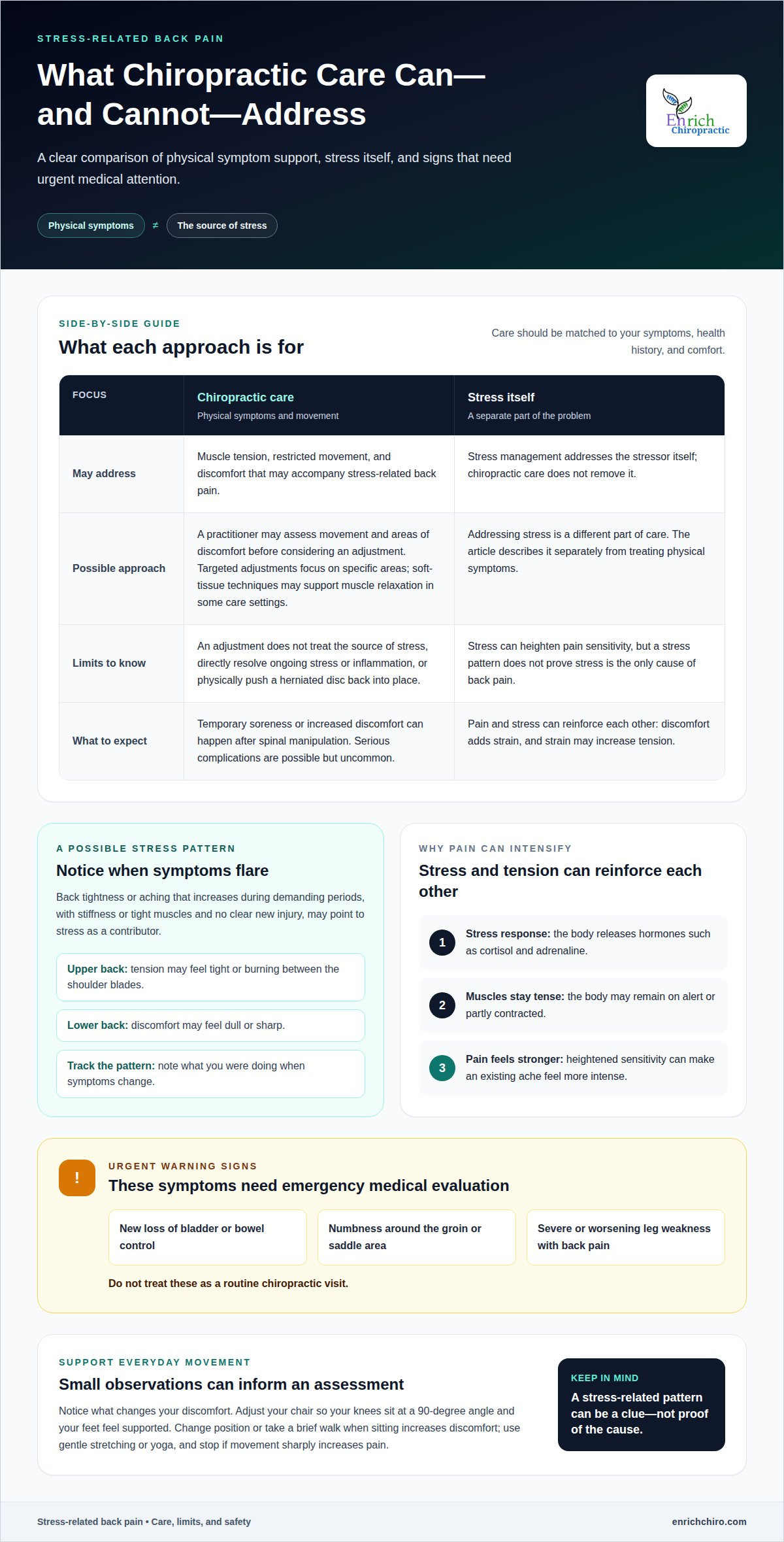
Chiropractic care may address muscle tension and restricted movement linked with stress, but it doesn’t remove the stressor itself. Chiropractic for stress induced back pain focuses on physical symptoms, while stress management addresses another part of the problem.
Stress-Related Muscle Tension
Stress-related muscle tension can build when the body stays alert or muscles remain partly contracted. In the back, it may cause fatigue, stiffness, restricted movement, and aching, even without a clear injury. For example, hours leaning over a laptop during a demanding workday can leave your upper back sore. Noting when symptoms flare may help show whether stress contributes.
Stress Hormones and Back Muscle Tension
During stress, the body’s fight-or-flight response releases hormones such as cortisol and adrenaline. If that response stays active, muscles may remain tense, and heightened pain sensitivity can make an existing ache feel stronger. Stress and pain can reinforce each other: discomfort adds strain, and that strain may increase tension. This can help explain why pain rises during a difficult week without a new injury.
Chiropractic for stress induced back pain may involve assessing movement and areas of discomfort before considering an adjustment. If you have a pulled back muscle, an evaluation can help distinguish soreness and restricted motion from symptoms that need medical attention. Soft-tissue techniques may support muscle relaxation in some care settings, but they don’t directly resolve ongoing stress or inflammation.
New loss of bladder or bowel control, numbness around the groin or saddle area, or severe or progressive leg weakness with back pain requires immediate emergency medical evaluation. These symptoms call for urgent attention, not a routine chiropractic visit.
There isn’t one average visit cost that applies throughout the United States. The price depends on the type of visit and circumstances, while insurance coverage varies by plan. Review your benefits to understand how your plan handles chiropractic care.
Is chiropractic care safe for stress-related issues?
Safety depends on matching an adjustment to the person and their symptoms. Chiropractic adjustments address movement and tension in the spine, but they don’t treat the source of stress. A useful first step is reviewing your health history, pain location, and comfort before choosing a technique. For example, a sore lower back and pain traveling down a leg call for different considerations.
Spinal manipulation can cause temporary soreness or increased discomfort. Serious complications are possible but uncommon. These effects matter when weighing potential relief against your health and reason for treatment. Tell the practitioner about new symptoms, past injuries, or movements that sharply worsen pain. That information helps guide whether to adjust, change the approach, or pause.
Targeted spinal adjustments focus on specific areas rather than treating every part of the back the same way. The aim is to support movement and function, not force the spine into a fixed position. For stress-related back pain, a practitioner may focus on restricted movement or muscle tension. Adjustments don’t physically push a herniated disc back into place. Disc-related symptoms need to be considered alongside the diagnosis and clinical findings.
Comfort is part of safe care. Before an adjustment, explain what feels tender and which positions increase your pain. During treatment, speak up if pressure or movement feels uncomfortable. Afterward, note whether soreness is temporary or symptoms have changed. That feedback helps guide the next decision. Chiropractic care is not a substitute for urgent medical evaluation when serious warning signs occur. New loss of bladder or bowel control, saddle-area numbness, or severe or worsening leg weakness requires emergency attention.
If back discomfort or restricted movement is affecting daily activities, a chiropractic adjustment can be a starting point for addressing those symptoms.
How Do I Know if My Back Pain Is Related to Stress?
Back pain may be stress-related when it flares during demanding periods, comes with stiffness, or has no clear physical trigger. Lower-back discomfort can feel dull or sharp, while upper-back tension may feel tight or burning between the shoulder blades. The pattern can help you decide whether chiropractic for stress induced back pain is worth discussing during an assessment.
Stress can shape posture without you noticing. You might hunch over a laptop during a tense workday or sit rigidly through a long commute. Both can add strain to the spinal muscles and joints. At a desk, adjust your chair so your knees sit at a 90-degree angle and your feet feel supported. A more comfortable setup can reduce avoidable strain, though it can’t identify the cause by itself.
Try these simple observations during your day:
Notice if your shoulders rise while reading messages, then let them settle.
Change position or take a brief walk when sitting increases discomfort.
Use gentle stretching or yoga to support mobility and ease tightness.
Regular movement can strengthen muscles that support the spine and release endorphins. A daily walk is a practical way to move when stress keeps you sitting still. Yoga can combine movement with relaxation. Choose comfortable motions and stop if an activity sharply increases pain. These habits support general back health, but they don’t prove stress is the only cause.
Before considering chiropractic for stress induced back pain, note when symptoms change and what you were doing. For example, record whether discomfort follows a long drive, a difficult work call, or a calmer walk. This pattern can inform an assessment. Persistent pain, reduced movement, or symptoms interfering with daily tasks deserve professional attention, not just posture changes.
Stress-induced inflammation and pain sensitivity
Stress can activate the body’s fight-or-flight response, trigger muscle spasms, and reduce blood flow to back muscles. A tense workday spent standing with poor posture can add strain to already irritated tissue. Stress can also increase inflammation and lower pain tolerance. An ache that feels manageable on a quiet day may feel sharper during a demanding meeting, even if the original physical cause hasn’t changed.
Chronic stress can increase inflammatory markers through cortisol dysregulation, which may worsen existing joint or tissue irritation. This doesn’t mean every sore back has inflammation caused by stress. It shows why stress can amplify discomfort that already has a physical cause. The nervous system also affects how strongly pain signals register. When it stays on high alert, ordinary movement may feel more uncomfortable than usual.
Stress and pain can reinforce each other. Pain can disrupt rest and daily activities, adding strain; rising stress can then increase tension and sensitivity. To spot this pattern, note the setting and activity when symptoms change. For example, record whether back discomfort increases after a tense call or eases during a calmer walk. That context can help distinguish a stress-related flare from a new or changing symptom.
Track stressful events alongside pain and movement changes.
Break up prolonged standing or sitting with comfortable position changes.
Use slow, deep abdominal breathing to counter the stress response.
Reducing stress may help interrupt the pain cycle, but it doesn’t identify every cause or replace evaluation for persistent symptoms. If back pain keeps limiting movement, book an evaluation for back pain to discuss your symptoms and possible care.
Enrich Chiropractic: First visit consultation and adjustment
Enrich Chiropractic provides a first-visit consultation and adjustment for people seeking care for back pain or stress-related muscle tension. The consultation gives you a chance to describe where discomfort occurs, what affects it, and how it limits movement. That information helps shape an approach suited to your symptoms.
For continuing back discomfort, a standard chiropractic adjustment may be considered as part of back pain care. Enrich Chiropractic also provides care for neck pain and tension, which can accompany tight shoulders or upper-back strain. Chiropractic care addresses physical symptoms; it isn’t a substitute for help with the underlying sources of ongoing stress.
If you’d like to discuss whether a first visit is right for your symptoms, contact Enrich Chiropractic.
Choose a next step that fits your daily life
Choose one meaningful goal for your back, such as sitting through a meeting more comfortably or returning to a regular walk. A clear goal makes it easier to explain what you need help with and notice whether daily activities change. You don’t have to solve every source of stress before addressing discomfort.
Considering chiropractic for stress-induced back pain starts with understanding how your symptoms affect movement and routine. Chiropractic care may be one part of addressing physical discomfort, while steps to manage ongoing stress support a different part of the picture. Whether an adjustment is suitable depends on your symptoms and clinical findings.
Enrich Chiropractic can discuss your back pain and the care that may fit your needs. Contact Enrich Chiropractic today to take a straightforward next step toward moving more comfortably.
Frequently Asked Questions
Does Stress Cause Back Pain Even if I Don’t Have an Injury?
Yes, stress can contribute to back pain without a specific injury. A demanding workday, for example, can involve prolonged muscle bracing and less movement, leaving your back sore by evening. That pain is still physical. Notice whether it changes with activity, rest, or stressful situations, and share those patterns during an evaluation to help clarify what may be contributing.
Can chiropractic help a pulled back muscle?
A chiropractor can assess back pain after a pulling sensation and determine whether an adjustment is appropriate. For instance, pain that began while lifting a laundry basket may involve a muscle strain, but symptoms alone don’t identify the cause. Describe what you were doing, where it hurts, and which movements worsen it. That information helps guide care and whether another evaluation is needed.
How Effectively Can a Chiropractor Treat Back Discomfort?
Chiropractic care can help some people with certain types of low back pain, but the effect varies with the cause and symptoms. A useful measure is whether everyday tasks become easier, such as getting out of a car or bending to dress. Keep track of those changes rather than judging care by one moment of relief. New or worsening symptoms need appropriate medical attention.
How Many Sessions Do I Need for a Chiropractor to Cure Spine Problems?
There is no fixed session count that guarantees a cure for spine problems. One reported average for spinal problems is 12 sessions over six weeks, but that figure isn’t a personal prescription. The condition, examination findings, goals, and progress all affect the care approach. Discuss what improvement would look like for your daily activities, then review progress as treatment proceeds.
If my back pain is from stress, does that mean it’s not a real physical problem?
No. Stress-related pain is real physical discomfort, not something imagined. Muscle tension and a nervous system on high alert, for example, can make movement feel more painful. Stress can be one contributor alongside physical strain or another condition. Take symptoms seriously, especially if they interfere with sleep, work, or ordinary movement, and describe both the pain and its timing during an evaluation.
Can stress cause or worsen back pain?
Yes. Stress can contribute to back pain and make existing discomfort feel worse. A tense commute followed by hours at a desk can combine muscle bracing with limited movement. If pain repeatedly changes alongside stress, note the situations, activities, and movements involved. That pattern can help guide a useful conversation about causes and care, without assuming stress explains every symptom.



Comments