


Low Force Chiropractic Care in Marietta Compared With Standard Adjustments

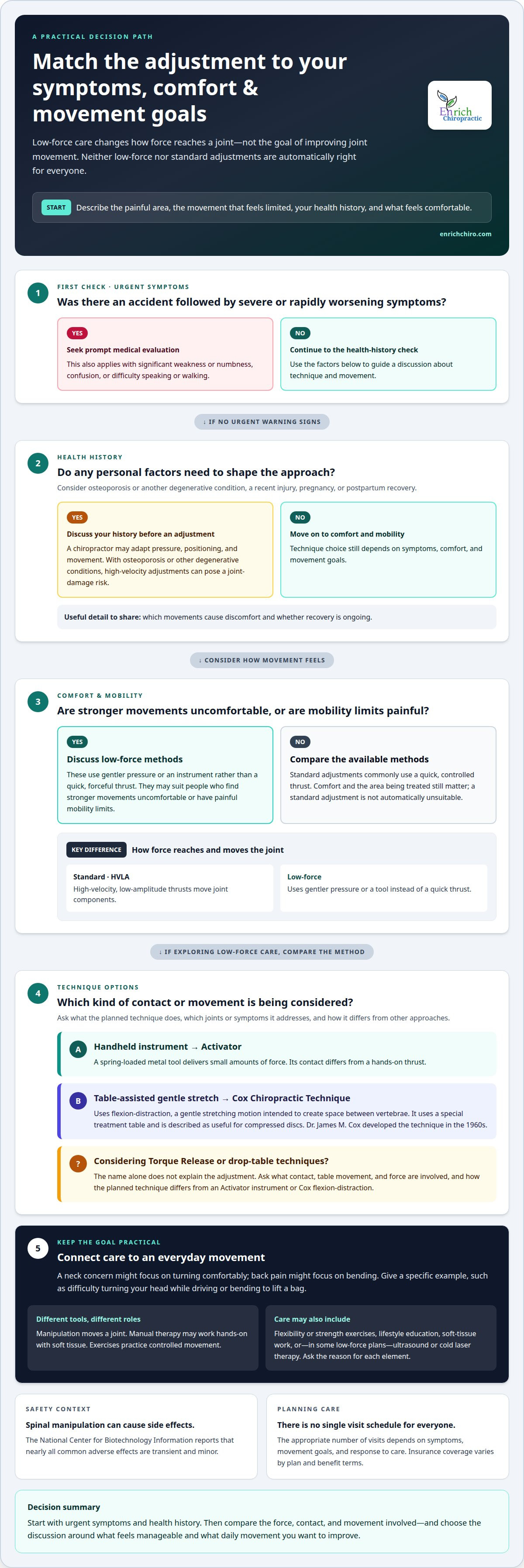
A gentler adjustment changes the amount and method of force, not the goal of improving joint movement. Low-force chiropractic care in Marietta uses lighter pressure or a handheld instrument, while standard adjustments commonly use a quick, controlled thrust to move a joint. Neither approach is automatically right for everyone.
It’s reasonable to want care that feels manageable, especially when pain or stiffness already limits your movement. This comparison explains how the techniques differ, who may prefer a lower-force approach, and how chiropractic manipulation and manual therapy may support pain relief and mobility. You’ll also learn what to consider when choosing an approach, so you can understand the options before discussing care for your symptoms.
Table of Contents
Who Benefits From Low-Force Chiropractic Care?
Low-force care uses gentler pressure or an instrument rather than a quick, forceful thrust. In Marietta, the right choice depends on symptoms, comfort, health history, and movement goals.
People Who May Benefit
Low-force techniques may suit patients who find stronger movements uncomfortable or have painful mobility limits. A chiropractor may also adapt care for people with osteoporosis or other degenerative conditions, since high-velocity adjustments can pose a joint-damage risk. Babies and toddlers may be treated with low-force methods, too. Discuss pregnancy, postpartum recovery, prior injury, and current symptoms before treatment so the approach reflects your situation.
For pregnancy or postpartum care, explain which movements cause discomfort and whether recovery is ongoing. This helps guide a focused discussion about positioning, pressure, and movement.
Back and Neck Pain Care
Back pain, neck pain, tension, and headaches are common reasons people explore chiropractic care. For recent neck pain, clinical guidelines support options that may include manipulation or mobilization, exercise, and other manual care. The useful comparison is not simply “gentle or strong.” Consider the painful area, the movements that are limited, and how comfortable you feel with each method.
In Marietta, Georgia, describe a practical example during an assessment, such as difficulty turning your head while driving or bending to lift a bag. These details connect care to everyday movement goals.
Holistic care may combine adjustments with lifestyle education, flexibility or strength exercises, and soft-tissue work. Ask how each element relates to your symptoms and daily activity rather than assuming every therapy is needed.
When comparing low-force chiropractic care in Marietta, consider each practice’s stated credentials, patient reviews, and descriptions of techniques and services. Insurance coverage varies by plan and benefit terms, so review how your plan treats chiropractic visits and the specific service.
Low-force care may be considered for back or neck pain, stiffness, headaches, and painful movement. Spinal manipulation can cause side effects; the National Center for Biotechnology Information reports that nearly all common adverse effects are transient and minor. After an accident, seek prompt medical evaluation for severe or rapidly worsening pain, significant weakness or numbness, confusion, or difficulty speaking or walking.
People with osteoporosis, a recent injury, or pregnancy-related concerns should discuss their health history before an adjustment. The appropriate number of visits depends on symptoms, movement goals, and response to care; there is no single schedule for every patient.
How Do Low-Force Adjustments Differ From Standard Adjustments?
The main difference is how force reaches the joint. Technique choice also affects the contact, movement, and equipment involved.
Low-Force and HVLA Techniques
Traditional chiropractic adjustments commonly use high-velocity, low-amplitude thrusts, or HVLA, to move joint components. Low-force approaches use gentler pressure or a tool instead. Compare how each technique applies movement and what feels comfortable for the area being treated. A standard adjustment is not automatically unsuitable, but osteoporosis and other degenerative conditions can affect whether HVLA is appropriate.
Activator Technique
The Activator technique uses a spring-loaded metal tool to deliver small amounts of force. The tool provides a different kind of contact from a hands-on thrust. If considering this option, discuss which joints or symptoms it addresses and how the instrument is used. These details make it easier to compare with other approaches.
Torque Release Technique is another named low-force approach. The name alone doesn’t explain how contact or movement will feel. Ask for a plain-language description of the planned adjustment and how it differs from HVLA. That comparison helps you make an informed choice without assuming every low-force technique works the same way.
The Cox Chiropractic Technique uses flexion-distraction, a gentle stretching motion intended to create space between vertebrae. Dr. James M. Cox developed the technique in the 1960s. It uses a special treatment table and is described as useful for compressed discs. The table-assisted movement differs from a quick thrust, so consider whether that motion suits your symptoms and mobility.
Drop-table techniques are another named option, but the label alone doesn’t explain the exact adjustment. Compare the method by asking what contact, table movement, and force it involves. For example, clarify how the planned technique differs from an Activator instrument or Cox flexion-distraction. If stiffness limits daily movement, stiffness and mobility care is a relevant next step to explore.
Chiropractic manipulation and manual therapy
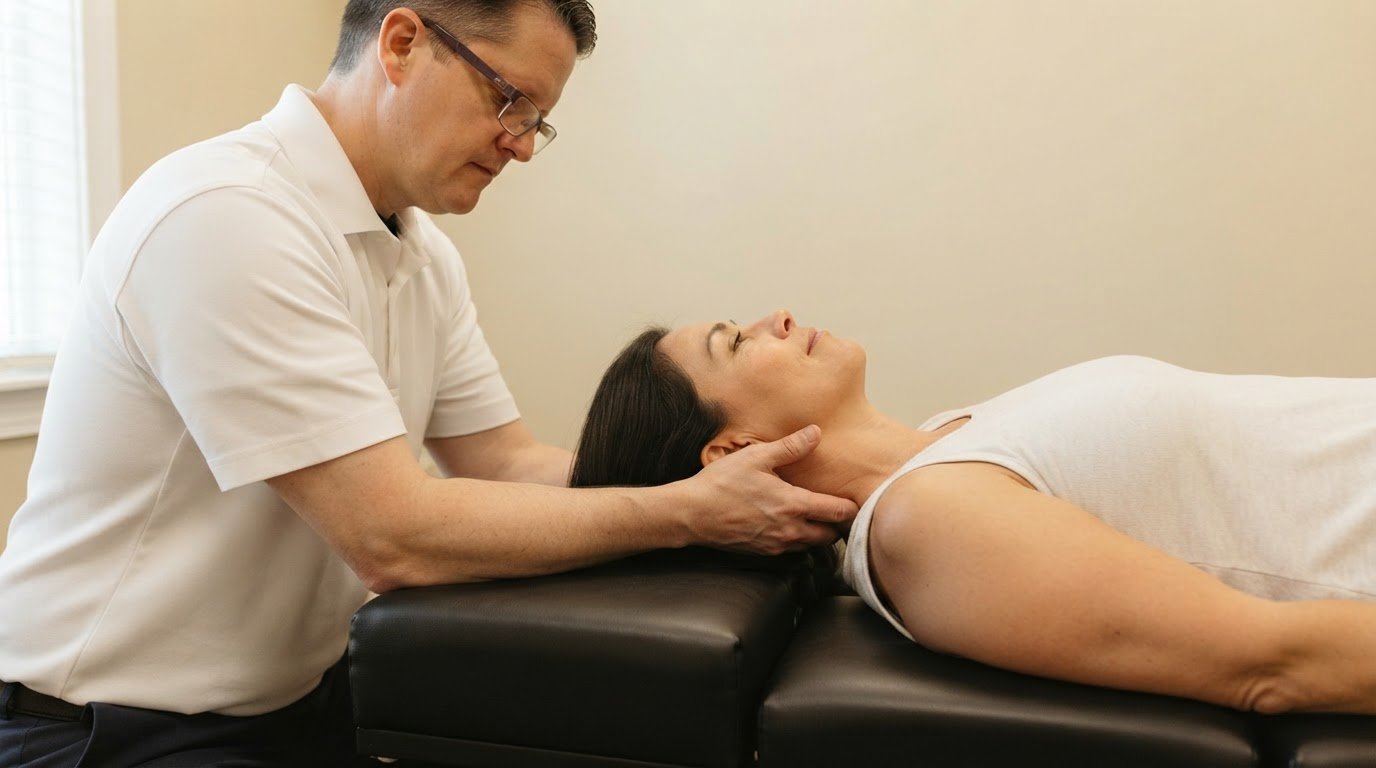
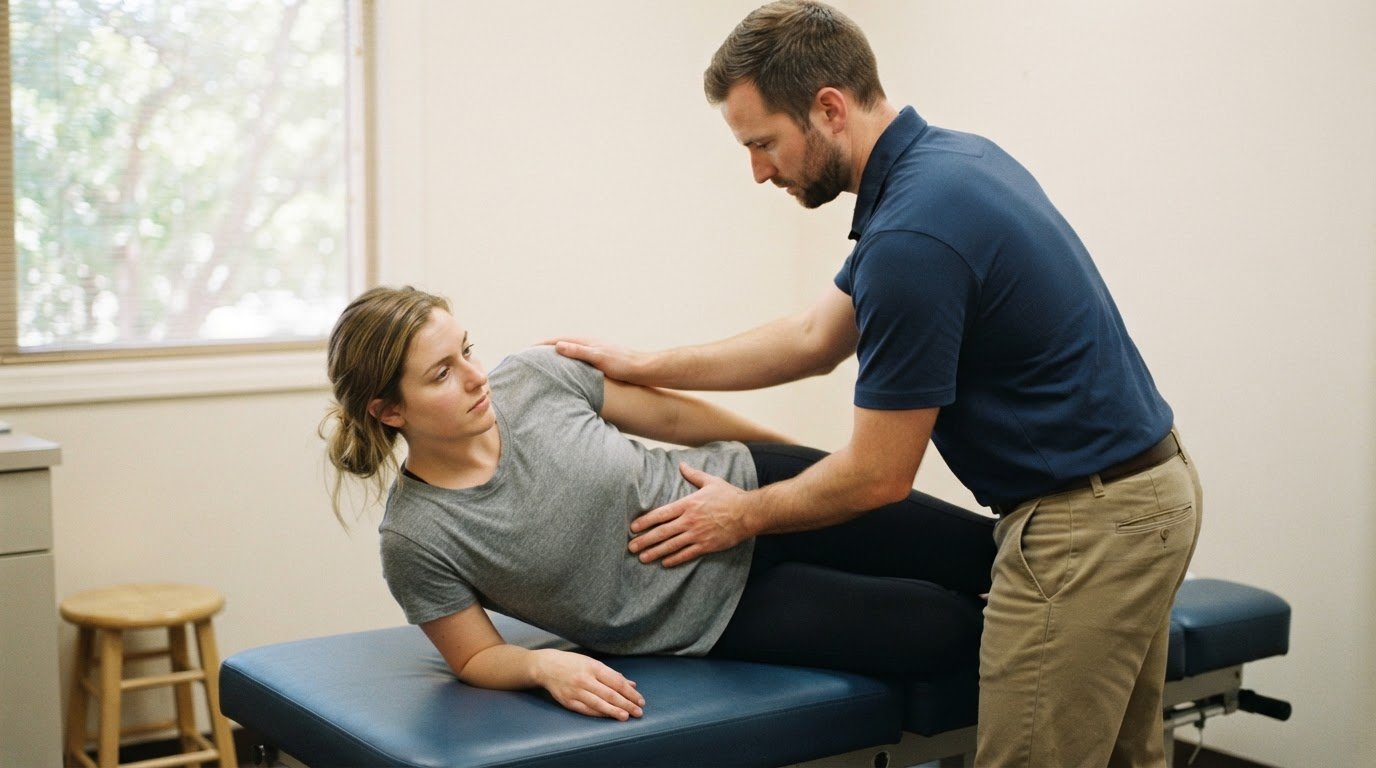
Chiropractic manipulation applies a controlled force or movement to a joint. Manual therapy can also involve hands-on work with soft tissue to address specific movement limits alongside an adjustment.
The approach should match the area and the task that feels difficult. For example, a person with neck stiffness may focus on turning comfortably, while someone with back pain may focus on bending. A chiropractor can explain which joint or tissue each technique targets. Alignment is one consideration, but everyday movement and symptoms matter, too.
Care may combine manipulation with flexibility or strength exercises, lifestyle education, or soft-tissue techniques. These elements serve different purposes: an adjustment moves a joint, while an exercise practices controlled movement. Ultrasound and cold laser therapy are also described as possible additions in some low-force plans. They are distinct from manual techniques, and each should have a clear reason for inclusion.
Chronic pain calls for attention to more than the adjustment itself. The painful area, activity limits, and response to movement can guide a focused discussion. Low-force adjustments may also be used around a surgical site or for extremity problems, such as frozen shoulder. That does not mean every technique suits every body area.
A randomized clinical trial compared cervical manipulation with conventional rehabilitation for acute grade II whiplash. It found comparable improvements in pain, function, and neck mobility. This is an example of manipulation being compared with another care approach, not a promise of individual results.
Side effects are also part of an informed discussion. The National Center for Biotechnology Information reports that nearly all common adverse effects of spinal manipulation are transient and minor. Before treatment, describe any new symptoms and ask what sensations or changes to watch for afterward.
Potential pain relief and mobility benefits
Relief matters most when it helps restore a useful movement, such as turning your head to check traffic or reaching a shelf without discomfort. Low-force care applies less force during an adjustment, while progress can be tracked through practical tasks. Note which movement feels restricted before care, then compare it afterward. This gives you a clearer measure than relying only on how the area feels at rest.
For uncomplicated whiplash, care generally favors returning to normal movement and activity rather than remaining immobilized indefinitely. Neck stiffness, headaches, and back soreness can appear hours or days after a collision. During the first three months following a traffic collision, cervical manipulation is one possible treatment option. A useful discussion can focus on which daily movements are difficult and how to approach them safely.
Low-force methods may feel more tolerable when painful mobility issues make a quick thrust uncomfortable. An instrument-based adjustment, for example, applies force differently from hands-on manipulation. That difference can matter to someone who feels guarded when a joint moves. The aim is to address movement limits without treating one technique as the only route to healing. Muscle tension, the affected area, and the activity you want to resume all help frame the conversation.
People who specialize in chiropractic care can discuss how an adjustment fits alongside gradual activity and movement goals. For example, track whether neck rotation, walking, or getting dressed becomes easier. If discomfort increases or new symptoms appear after an accident, seek appropriate medical evaluation. For persistent stiffness or headaches that interfere with everyday tasks, schedule a consultation about headache and mobility care to discuss your symptoms and next steps.
Enrich Chiropractic: First visit consultation and adjustment
Enrich Chiropractic offers a first-visit consultation and adjustment for people considering chiropractic care. If neck tension or headaches affect daily movement, the visit gives you a chance to explain your symptoms and discuss an appropriate adjustment. Describe activities that feel uncomfortable, such as turning your head while driving or working at a desk. That context helps keep the conversation focused on your needs.
A standard chiropractic adjustment is also available. The consultation can help you understand the approach and decide what questions matter before care begins. If you’re ready to discuss your symptoms, contact Enrich Chiropractic or visit enrichchiro.com.
Choose a Next Step That Fits Your Movement Goals
Before your next appointment, note what you want to do more comfortably. It could be turning your head, sitting through a workday, or bending to pick something up. Mention what worsens the discomfort, what eases it, and whether you prefer a gentler approach. These details help focus the conversation and connect care with daily life.
If back discomfort is your main concern, Enrich Chiropractic offers back pain care. A useful next step is to explain the movement you want to regain and discuss the adjustment approach being considered. If you’re exploring low-force chiropractic care in Marietta, clarify your priorities and ask how the proposed care relates to them.
Contact Enrich Chiropractic to discuss your needs and the next step. Contact Enrich Chiropractic when you’re ready. Small, practical steps can help you move toward care with greater clarity.
Frequently Asked Questions
What Other Treatments Complement Low-Force Chiropractic Adjustments?
Movement exercises and lifestyle education can complement an adjustment. Depending on a person’s needs, care may also involve soft-tissue techniques, flexibility or strength exercises, ultrasound, or cold laser therapy. These are different approaches, not automatic parts of every visit. For example, someone whose desk work limits shoulder movement might discuss mobility exercises as a separate way to work toward easier daily activity.
What is low-force chiropractic care and how does it work?
Low-force chiropractic care uses lighter pressure or an instrument to apply movement to a joint. This differs from a quick, hands-on thrust. For example, an Activator instrument delivers small amounts of force through a spring-loaded tool. The method depends on the treatment approach and the area being addressed. Describe which movement feels restricted, such as turning your neck or bending your back, to make the discussion specific.
Which chiropractors in Marietta, Georgia offer low-force techniques?
Enrich Chiropractic serves patients from Marietta and offers one-on-one chiropractic adjustments with gentle techniques. The practice is based in Kennesaw and serves nearby communities, including Acworth and Woodstock, as well as patients near Kennesaw State University. If you’re considering low-force chiropractic care in Marietta, focus on the adjustment approach and how it relates to your symptoms. For example, explain whether pressure or quick movements make a painful area harder to move.
What low-force chiropractic methods are used in Marietta, such as Activator or NUCCA?
Activator is a low-force method that uses a spring-loaded metal instrument to deliver small amounts of force. NUCCA is another named chiropractic approach, but a technique name alone doesn’t explain how an adjustment will be performed. Enrich Chiropractic provides gentle chiropractic adjustments; this does not mean a particular named method is used. Ask for a plain-language explanation of the planned contact and movement.
How do I prepare for a first low-force chiropractic appointment in Marietta?
Before a first visit, write down where discomfort occurs, when it began, and which movements make it worse. Include an example, such as pain while reaching overhead or turning to reverse a car. Bring a list of current medications and relevant health concerns, and wear clothing that allows comfortable movement. These details help focus the conversation on your symptoms and care options.

Comments