


Back Pain From Sitting at a Desk All Day: Practical Relief That Fits Your Workday

Perfect posture isn’t the answer to desk-related back pain. Changing positions is. If you’re looking for back pain from sitting at desk all day relief, start with small, regular changes rather than trying to hold one “right” position for hours.
Aching or stiffness that builds during a long workday can be frustrating, especially when you’re unsure whether to stretch, move, or adjust your chair. Sitting discomfort doesn’t automatically mean you’ve caused lasting damage. How you move through the day and how your workspace is set up may both play a part.
This article covers practical ways to add movement to your workday, adjust your desk, and recognize symptoms that need prompt medical attention. If you’re in Kennesaw, Marietta, Acworth, Woodstock, or nearby, Enrich Chiropractic offers one-on-one care with Dr. Rich, without requiring a long-term treatment plan.
Table of Contents
Why Sitting at a Desk All Day Can Leave Your Back Aching
Your back may feel stiff when you stand after a long meeting, ache while you work, or feel sore after the commute home. These patterns are common, but they don’t point to one cause on their own. Desk-related back pain describes discomfort that occurs alongside long periods in work positions. It’s a description, not a diagnosis.
Long stretches with little movement may contribute to discomfort for some people. Other factors can matter too, including activity levels, sleep, stress, past injuries, and health conditions. The reasons vary from person to person. For a broader overview of possible causes and care, see this guide to understanding back pain.
A link between long sitting and back pain is an association, not proof that sitting alone caused your pain. Desk time may be one part of the picture, not evidence that you’ve damaged your back.
Common patterns after a long stretch at your desk
Some people notice tightness or stiffness in the lower back when they get up, which may ease as they walk around. That change is useful to notice, but it doesn’t confirm a particular condition. Others feel a localized ache or discomfort that travels into the buttock or down a leg. Pain that spreads can have different causes. Seek guidance if it persists, worsens, or affects daily activities.
Look for patterns rather than trying to self-diagnose. Note when discomfort starts, what seems to bring it on, and what helps it settle. For example, compare how your back feels after a long video call with how it feels after a task that lets you move around. A brief, factual note about timing and symptoms can help you describe the pattern if you seek care.
Why staying in one position can matter
Your body is built to move between positions. Staying still for a long stretch can leave muscles feeling tight and joints feeling stiff, especially when you’re focused on a task and barely shift your posture. This doesn’t mean a particular sitting position is automatically harmful. Holding any one position for too long may simply be uncomfortable for some people.
The spine includes small bones, cushioning discs between them, and surrounding muscles and other tissues. These parts work together as you sit, stand, bend, and move. A sustained position changes the demands placed on those tissues, but the effect varies. Sitting isn’t a guaranteed cause of injury, and back discomfort doesn’t automatically mean a disc or other structure has been damaged.
If you’re looking for back pain from sitting at desk all day relief, understanding your patterns is a useful first step. Focus on what you can observe without blaming yourself or assuming the worst.
What May Help Ease Desk-Related Back Pain During the Workday
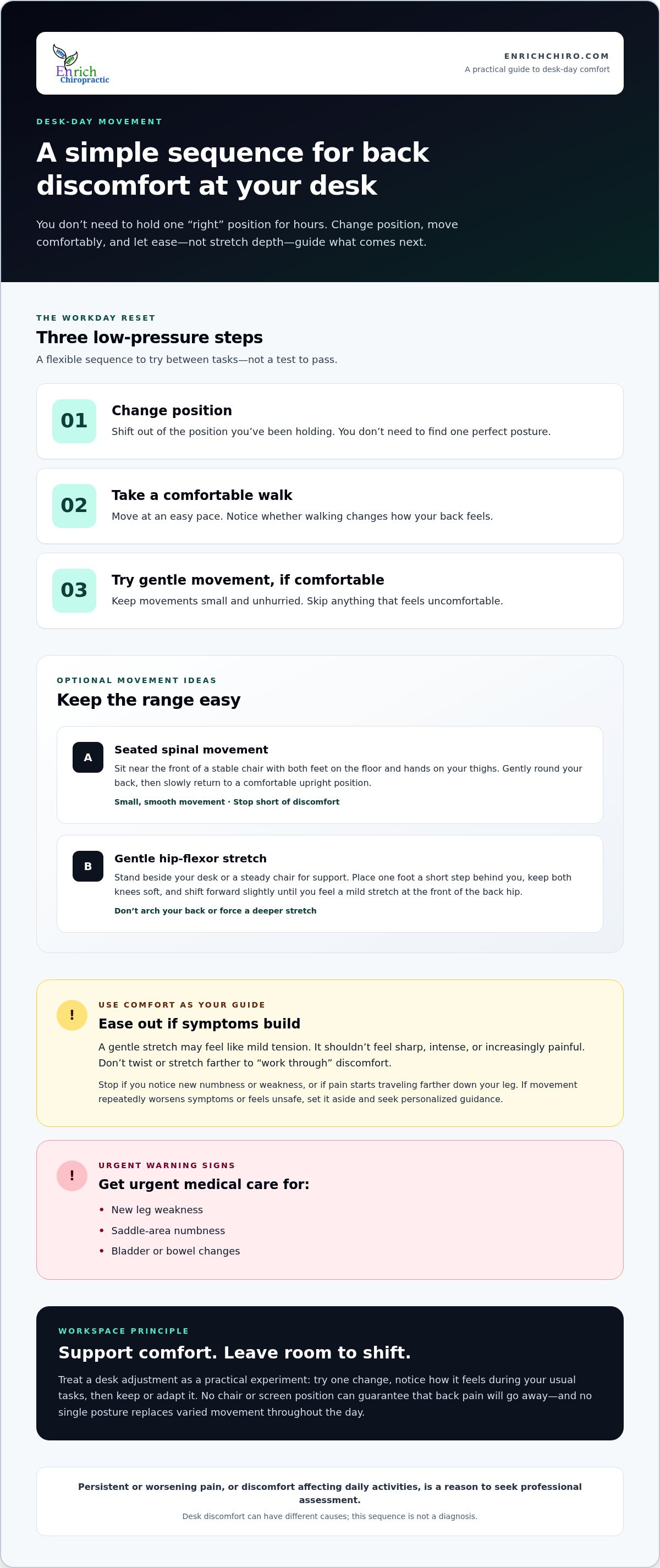
Try a simple sequence rather than pushing through discomfort or starting with a forceful stretch. First, change position. Then take a comfortable walk. If that feels okay, try gentle mobility within an easy range. Small, unhurried movements are enough to explore what feels comfortable.
Change position, walk comfortably, then try gentle movement if it feels right. This may help you move more easily, but it can’t address every possible cause of back pain. Treat it as a low-pressure way to vary your workday, not a test you need to pass.
Gentle movements to try between tasks
For a seated spinal movement, sit toward the front of a stable chair with both feet on the floor. Rest your hands on your thighs. Gently round your back, then slowly return to a comfortable upright position. Keep the movement small and smooth, and stop short of any position that feels uncomfortable.
To try a hip-flexor stretch, stand beside your desk or a steady chair for support. Place one foot a short step behind you, keep both knees soft, and shift your weight forward slightly until you feel a mild stretch at the front of the back hip. Don’t arch your back or force a deeper stretch. If this position doesn’t feel good, skip it and walk comfortably instead.
When to modify or stop an exercise
A gentle stretch may feel like mild tension. It shouldn’t feel sharp, intense, or increasingly painful. Ease out if discomfort builds, and don’t twist or stretch farther to try to “work through” it. You don’t need to keep doing a movement that feels awkward or aggravates your back.
Stop if you notice new numbness or weakness, or if pain starts traveling farther down your leg. If movement repeatedly makes symptoms worse or feels unsafe, set the exercises aside and seek personalized guidance. A clinician can consider your symptoms and help you decide what’s appropriate for you.
For back pain from sitting at desk all day relief, comfort is a better guide than reaching a certain stretch depth. Note which positions and movements seem to change your symptoms. This can be useful when discussing recurring discomfort. Enrich Chiropractic provides one-on-one back pain care with Dr. Rich in Kennesaw.
A Better Desk Setup Without Chasing Perfect Posture
Your workspace should help you work comfortably, not lock you into one “correct” pose. Treat a setup adjustment as a practical experiment: try one change, notice how it feels during your usual tasks, then keep or adapt it based on comfort. No chair or screen position can guarantee that back pain will go away.
No single posture replaces varied movement throughout the day. A position that feels fine at first may become tiring if you hold it for hours. Aim for support and ease, with room to shift when you need to.
Set up your chair, screen, and keyboard
Make small changes to reduce reaching, prolonged neck bending, or pressure from an awkward sitting position. Use this quick comparison as a starting point, not a strict checklist.
Change one thing at a time where possible. For example, move the mouse closer and see whether your working position feels less strained. If an adjustment causes new discomfort, try another position. The goal is a setup that suits your body and tasks, not an expensive or perfect workstation.
Use position changes instead of posture rules
If your workspace allows, alternate between comfortable sitting and standing. Standing can offer a change of position, but it isn’t automatically better than sitting all day. Pay attention to how each position feels, and shift again if you become uncomfortable.
Use natural transitions between tasks as movement prompts. Stand to take a call, walk to refill your water, or change position after finishing a document. These small opportunities add variety without requiring a rigid schedule or interrupting every task.
For back pain from sitting at desk all day relief, think in terms of a flexible setup and regular position changes, not one ideal posture. The best adjustment is one that feels comfortable and still lets you move freely through your workday.
Build a Realistic Desk-Day Plan for Back Pain Relief
A useful routine should fit your actual workday. You don’t need a perfect schedule or a long exercise break. Choose simple movement options you can repeat, then adjust them based on comfort and the demands of your job. This plan is a starting point, not a diagnosis or a fix for every cause of back pain.
A simple sequence for a typical workday
Use these steps as flexible prompts. If a step doesn’t suit your symptoms, skip it or choose an easier option.
Before work: Settle into a comfortable workspace. Before a long stretch of desk work, take a short walk around your home or office, or do a few gentle movements that feel easy.
Between tasks: Pair movement with something you already do. After finishing an email or meeting, stand, shift position, or walk briefly before starting the next task.
During a break: Choose an option that fits your space and comfort. Walk to refill your water, move around the room, or change from sitting to standing if your workspace allows.
After work: Try easy activity that feels comfortable, such as a relaxed walk or light movement at home. You don’t need to make up for a desk day with a strenuous workout.
Instead of following one universal break interval, pick reminders you can maintain. Link a short movement opportunity to finishing a task, ending a call, or taking lunch. If reminders become distracting or hard to keep, make them simpler.
Adjust the plan to your symptoms and schedule
Your routine can be brief on busy days and more varied when you have room. If standing is uncomfortable, try a small position change or an easy walk instead. If a movement worsens your symptoms, leave it out. The aim is to find comfortable options that work with your day, not to push through pain.
For several workdays, jot down when discomfort starts and what was happening beforehand. Note whether you were sitting, standing, commuting, or moving, and whether a position change seemed to help or aggravate it. Keep the record factual. It can reveal patterns without telling you what condition you have.
Use those notes to make small changes, such as moving a reminder to a natural pause or choosing a gentler activity. A routine may support comfort, but it can’t explain every symptom or replace an assessment when pain persists, worsens, or limits daily activities. For back pain from sitting at desk all day relief, steady, adaptable habits are more practical than an all-or-nothing plan.
If back discomfort keeps disrupting your workday, schedule a one-on-one back pain consultation with Enrich Chiropractic to discuss your symptoms with Dr. Rich.
When Desk-Related Back Pain Needs More Than Self-Care
Workday adjustments can be a sensible first step, but they aren’t the answer to every kind of back pain. Arrange a professional assessment if pain keeps returning, persists, gets worse, or makes it hard to work, sleep, walk, or manage everyday activities. You don’t need to wait until it becomes severe to talk with a health professional.
Sudden or alarming symptoms need a different response. Don’t try to manage them with desk changes, stretches, or a routine appointment. Seek urgent medical care instead.
Symptoms that should not be managed with desk tweaks alone
Occasional stiffness that settles as you move is different from symptoms that are severe, worsening, unexplained, or limiting your usual activities. Pay attention to changes, but don’t try to identify a disc, nerve, or other condition based on symptoms alone. A professional assessment can help determine what should happen next.
Get urgent medical care for new leg weakness, numbness around the saddle area, or changes in bladder or bowel control.
Seek timely professional advice if back pain is persistent, repeatedly returns, worsens, or interferes with normal activities.
Bladder or bowel changes and saddle-area numbness can be emergencies, particularly when they occur with back pain. Go to an emergency department or contact local emergency services. Don’t wait to see whether a stretch or a change in posture helps.
If you’re unsure how urgent a symptom is, contact a qualified medical professional or local urgent medical service for guidance.
Personalized back-pain care around Kennesaw
If your symptoms aren’t an emergency but aren’t settling with everyday adjustments, an individual visit can give you time to discuss what you’re experiencing and consider appropriate care. Enrich Chiropractic provides one-on-one chiropractic care with Dr. Rich for back discomfort. Care is visit-based and doesn’t require a long-term treatment plan. The conversation can focus on your symptoms and concerns, without a prescribed visit count.
The practice serves Kennesaw, Marietta, Acworth, Woodstock, and surrounding communities. If desk-related discomfort keeps interrupting your day, learn about straightforward, one-on-one care and discuss your back pain with Dr. Rich.
Finding back pain from sitting at desk all day relief can involve more than changing your chair or adding movement breaks. Self-care may support comfort, while persistent symptoms deserve attention and urgent warning signs need prompt medical care. Choose the level of help that fits your symptoms.
Choose One Small Step for Your Workday
You don’t need to overhaul your routine all at once. Choose one workspace adjustment or movement reminder that feels manageable, then notice how your back responds over the next few workdays. If discomfort keeps returning or makes everyday tasks harder, personalized guidance can help you decide on a sensible next step.
For back pain from sitting at desk all day relief, there’s no need to figure everything out alone. Enrich Chiropractic offers one-on-one care with Dr. Rich for people in Kennesaw and nearby communities. Walk-ins and same-day appointments are available, including Sundays. A first visit consultation and adjustment is $60, and subsequent adjustments are $35.
Explore one-on-one chiropractic care in Kennesaw and take a straightforward next step at a pace that feels right for you.
Frequently Asked Questions
Is back pain from sitting at a desk always caused by poor posture?
No. Poor posture is only one possible contributor. Long periods in one position, sleep, activity, stress, health history, and other factors may also play a part. If you’re looking for back pain from sitting at desk all day relief, try one small change, such as standing during a phone call, and notice what follows. Tracking patterns may guide your next step, but it can’t diagnose the cause.
Can stress make back pain from desk work feel worse?
Stress can affect how pain and muscle tension feel, but that doesn’t mean symptoms are imaginary or caused by stress alone. Alongside comfortable movement, consider practical supports such as a short pause between demanding tasks or a calmer end-of-day routine. Notice whether symptoms change with your workload or rest. If pain continues or changes, discuss it with a qualified healthcare professional rather than assuming stress explains it.
How can I tell whether my office chair is contributing to back discomfort?
A chair may be one factor, but discomfort alone can’t identify its cause. Try changing one detail at a time, such as moving closer to the desk or adjusting your seat so your feet feel supported. Notice whether symptoms vary during a similar task or after you stand. Keeping other factors steady makes the comparison more useful. If discomfort persists, share what you’ve observed during an assessment.
Can back pain from sitting affect one side more than the other?
Yes, discomfort can feel stronger on one side, but that pattern alone doesn’t explain why. Note where it begins, whether it spreads, and what you were doing when it changed. Persistent or worsening one-sided pain, especially with new numbness or weakness, deserves professional guidance. New severe symptoms, numbness around the saddle area, or bladder or bowel changes call for urgent medical evaluation, not a desk adjustment.
Should I keep exercising when my back hurts after sitting?
Continue only with activity that feels comfortable. A mild stretching sensation can be different from sharp, escalating, or spreading pain. If an exercise brings on new symptoms, stop and choose an easier everyday movement rather than forcing it. Repeated trouble with exercise or ordinary tasks is a reason to seek individualized guidance. New weakness or bladder or bowel changes need urgent medical care.
What happens if my back pain does not improve after changing my desk setup?
A desk change may not address every contributor. If your discomfort persists, keeps returning, worsens, or limits tasks such as walking or sleeping, arrange a professional assessment. Bring a brief record of when symptoms occur and what you’ve tried. If you’re in Kennesaw, Marietta, Acworth, Woodstock, or nearby, Enrich Chiropractic provides one-on-one care with Dr. Rich. Seek urgent care for new weakness, saddle-area numbness, or bladder or bowel changes.
Can a short walk help after sitting for a long time?
A comfortable walk gives you a chance to change position and move after desk work. Keep the pace easy and choose a route that feels manageable, even if that’s just around your room or hallway. Stop if walking sharply worsens pain or brings on new symptoms. A walk isn’t a guaranteed treatment, and persistent, worsening, or limiting pain still deserves professional assessment.

Comments