


Chiropractic for Chronic Pain Management in Kennesaw

Chronic pain calls for practical, personalized care, not a one-size-fits-all fix. Chiropractic for chronic pain management in Kennesaw can include discussing your symptoms, how pain affects movement, and whether an adjustment fits your needs. Chiropractic care may address ongoing back and neck pain, but results vary from person to person.
Living with pain can make everyday tasks harder, especially when discomfort keeps returning. Before choosing care, it’s reasonable to want clear information about what a visit involves and what it may help address.
This guide explains how chiropractic care may fit into chronic pain management, what to discuss when considering care, and how it may address back and neck pain. You’ll also find practical points to consider when deciding whether it suits your situation.
Table of Contents
What is Pain Management?
Pain management considers how discomfort affects movement, sleep, work, and daily routines. Chiropractic care may be one part of a broader approach to managing those effects.
Chiropractic Care in Kennesaw
Chiropractic for chronic pain management in Kennesaw starts with a conversation about symptoms, health history, and movement. Patients can describe which activities trigger discomfort, such as lifting groceries or turning their head while driving. Chiropractors complete four years of doctoral-level training. Look for clear explanations of the approach and how it relates to your concerns.
To review a Georgia chiropractor’s credentials, use the state’s official license lookup and compare the listed name with the practitioner you plan to see. If considering care during pregnancy or for a child, discuss the patient’s needs and health history before any adjustment.
Care for Chronic Pain and Injury Recovery
When discussing chiropractic for chronic pain management in Kennesaw, share where pain occurs, when it began, and how it affects daily activities. For example, note whether back discomfort worsens after lifting or neck tension follows desk work. These details help shape a focused conversation about your goals and whether chiropractic care suits your situation.
Adjustments can cause temporary soreness or increased discomfort. Tell the practitioner about health conditions and previous injuries, and report any new or worsening symptoms after treatment.
Surgery and Conservative Care
Non-surgical care may be considered before a surgical consultation, but it does not rule out surgery. The relevant factors include your symptoms, their effect on daily function, and how you respond to care. Discuss these considerations with your healthcare team when deciding on next steps.
Seek urgent medical care for severe or rapidly worsening pain, or for new symptoms that feel alarming. For a routine appointment, bring notes about past injuries, current discomfort, and care you’ve already tried. These details help make the discussion about an appropriate next step more focused.
Personalized treatment plans
Useful care connects your symptoms with movement, daily activities, and practical goals. Start by discussing your needs rather than assuming a preset visit schedule will fit.
Conditions Addressed
Chiropractic care may address chronic back pain, neck pain, headaches, sciatica, and stiffness. During an orthopedic assessment, describe where discomfort starts, what makes it worse, and how injuries affect your ability to work, sleep, or move. These details help shape treatment around your specific concerns.
More than one concern can be discussed during a visit. For example, if you have neck pain and recurring headaches, describe both symptoms, when they occur, and which movements feel limited. Clear goals make it easier to discuss whether care is helping with daily activities.
Treatment Techniques and Physiotherapy
Chiropractic care may include adjustments chosen with your symptoms and comfort in mind. The practitioner should explain the technique, the area being treated, and what you may feel. This gives you a chance to raise concerns and understand how the adjustment relates to your needs.
Some care plans also use movement-based support, such as strength or balance exercises. These activities can focus on a practical goal, like improving steadiness while walking or building tolerance for desk work. A variety of approaches may be considered, but each should connect to the patient’s needs rather than being added automatically.
Visit Recommendations and Treatment Duration
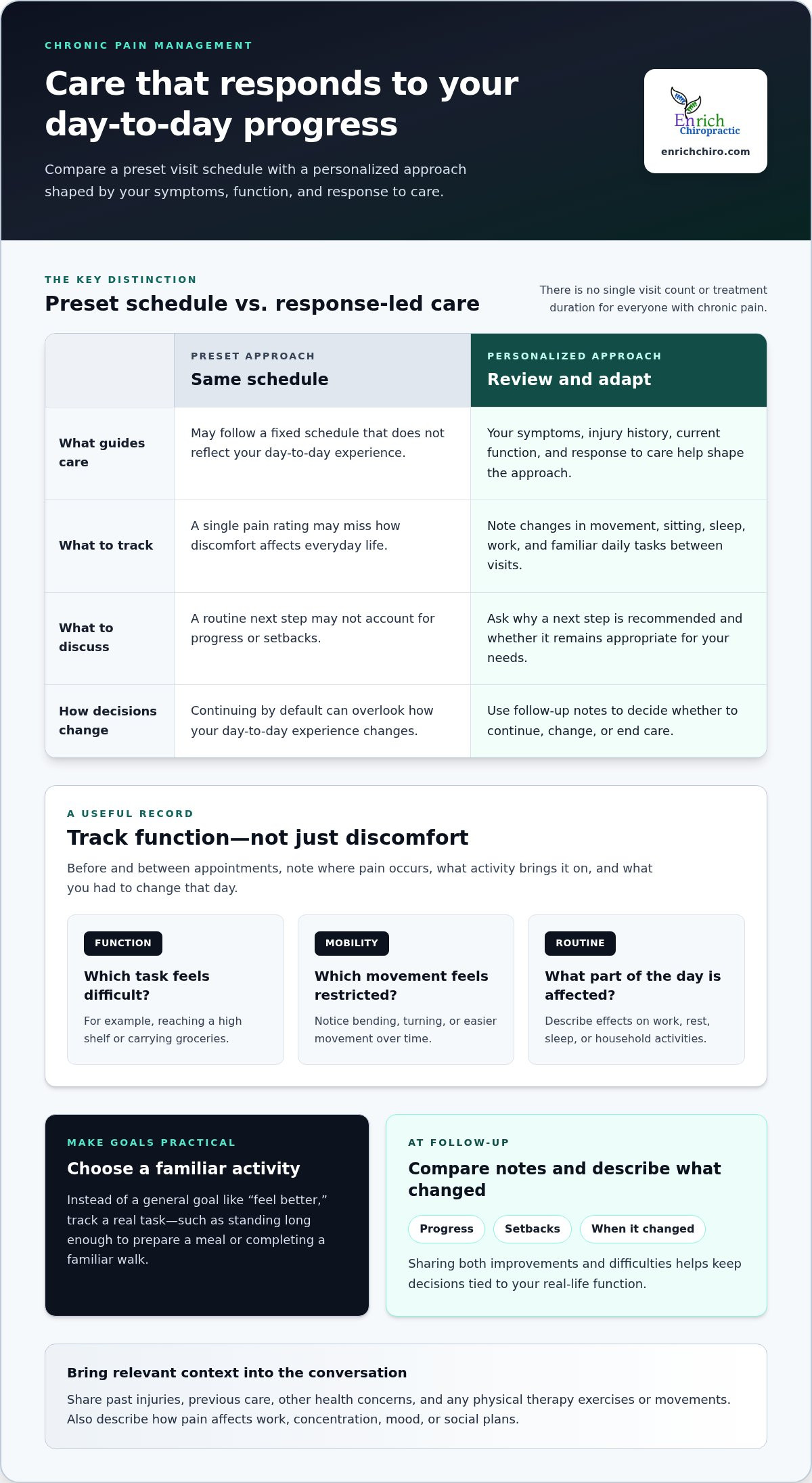
There is no single visit count or treatment duration for every person with chronic pain. The approach depends on your symptoms, injury history, current function, and response to care. Ask why a particular next step is being recommended and how you can review whether it remains appropriate.
Track changes between visits, such as easier turning, sitting longer, or fewer interruptions to sleep. Share both progress and setbacks at follow-up appointments. This helps guide decisions about whether to continue, change, or end care instead of following a fixed schedule that doesn’t reflect your day-to-day experience.
Chronic pain management
Managing chronic pain means looking beyond a single pain rating. Consider how symptoms affect function, mobility, sleep, and everyday tasks. For example, note whether discomfort changes your ability to sit through a meal, carry groceries, or turn your head while driving. These details make it easier to discuss progress.
Keep a simple record before and between appointments. Note where pain occurs, which activity brings it on, and what you had to change that day. Include stiffness after waking or discomfort after desk work. Patterns in these examples give the practitioner useful context about your routine and priorities.
Function: Record a task that feels difficult, such as reaching a high shelf.
Mobility: Note movements that feel restricted, such as bending or turning.
Routine: Describe how symptoms affect work, rest, or household activities.
A spinal concern is only one part of the picture. Share relevant injuries, previous care, and other health concerns so the discussion reflects your situation. If you attend physical therapy, mention the exercises or movements involved. Clear communication helps you consider different parts of your routine together.
Use specific goals to review care. Instead of writing “feel better,” choose an everyday task, such as standing long enough to prepare a meal or completing a familiar walk. At follow-up appointments, compare how the task feels with your earlier notes. Describe what changed and when, so decisions stay tied to real-life function.
Chronic pain can affect mood, concentration, and social plans. Tell the practitioner if pain leads you to skip activities or change how you work. Discussing these effects helps clarify your priorities and whether chiropractic care fits into your broader approach to managing pain.
Back and neck pain relief
Back and neck pain can affect simple movements, from lifting a laundry basket to checking a blind spot. Describe the exact movement that brings on discomfort during a consultation. Also note whether symptoms stay in one area or travel into an arm or leg. These examples help focus the conversation on your daily needs, not just a general pain rating.
A useful practice is to connect treatment goals with specific activities. For back discomfort, that might mean sitting through a work meeting or bending to tie shoes. For neck pain, it could mean turning comfortably while driving or looking down at a screen. Tracking these tasks before and after care gives you practical details to discuss.
Location: Point to where the pain starts and where it moves.
Triggers: Name the movement or position that brings it on.
Impact: Explain which work, home, or sleep activity it disrupts.
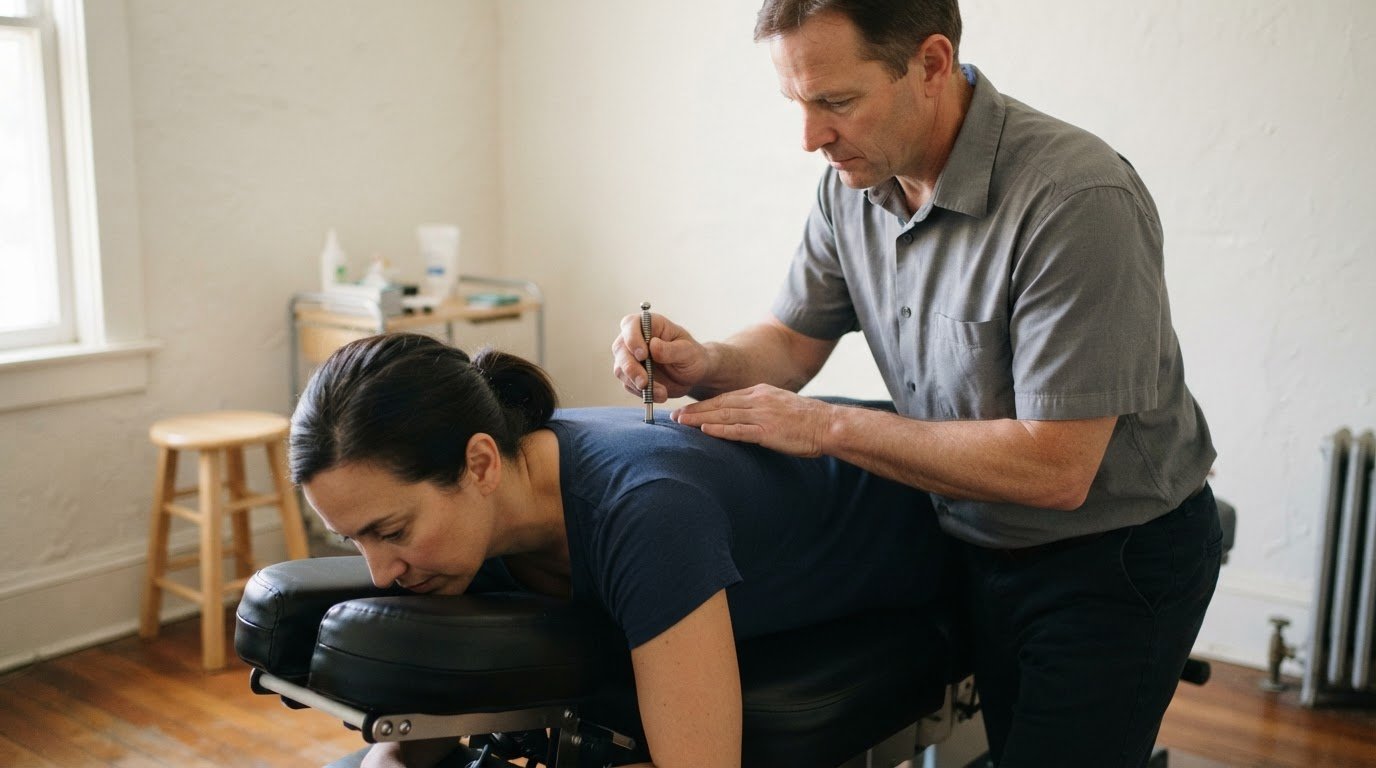
Chiropractic adjustments are one form of care for back and neck concerns. Before an adjustment, share previous injuries, health conditions, and any change in symptoms. Ask what the adjustment involves and how it relates to your goal. Clear answers help you understand the approach and decide whether it fits your preferences.
Consider pain relief alongside function. If turning your head remains difficult or back discomfort limits a familiar task, describe that at a follow-up. Report worsening symptoms or new concerns promptly. A thoughtful review can help determine whether the current approach still makes sense.
For a first step, book a first-visit consultation to discuss back or neck discomfort and the movements you want to improve. Bring a short list of triggers and daily tasks affected. That gives the conversation a clear starting point and helps connect care with a practical benefit.
Enrich Chiropractic: First visit consultation and adjustment
Enrich Chiropractic offers a first visit consultation and adjustment for people seeking help with discomfort and movement. Use the visit to describe where pain occurs, what affects it, and which daily activities feel difficult. This gives the conversation a clear focus from the start.
For ongoing concerns, Enrich Chiropractic provides standard chiropractic adjustments, neck pain and tension care, and headache treatment. Share your symptoms and priorities openly so the conversation can focus on the issues that matter to you.
If back or neck discomfort is disrupting your routine, consider a first visit to discuss your needs. Contact Enrich Chiropractic to learn more or arrange an appointment.
Take a Practical Next Step
Living with pain can make it tempting to wait for a better day before addressing it. Choose one everyday activity you want to make easier, then bring that goal into a care conversation. It might be sitting through work, moving comfortably at home, or returning to a familiar routine. Clear priorities help keep the discussion focused on what matters to you.
If you’re considering chiropractic for chronic pain management in Kennesaw, Enrich Chiropractic offers a first visit consultation and adjustment, standard chiropractic adjustments, and back pain care. Share what you’re experiencing and what you hope to improve. One-on-one care with Dr. Rich gives you a chance to discuss whether this approach fits your needs.
Contact Enrich Chiropractic to discuss a first visit. Taking one informed step can help you move forward with greater clarity and confidence.
Frequently Asked Questions
What is chiropractic care?
Chiropractic care is a hands-on approach focused on the spine, joints, and movement. It commonly includes adjustments, in which a practitioner applies controlled force to a joint. A visit may also include discussing symptoms and how they affect daily activities. For example, if you have recurring stiffness, describe which movements feel restricted and what tasks you want to manage more comfortably.
What chronic pain conditions do Kennesaw chiropractors commonly treat?
Chiropractic care may address back pain, neck discomfort, headaches, sciatica, stiffness, and mobility concerns. Enrich Chiropractic serves Kennesaw, Marietta, Acworth, Woodstock, and nearby areas, including patients near Kennesaw State University. When describing symptoms, mention whether pain stays in one area or travels, such as discomfort extending from your lower back into a leg.
What chiropractic techniques are used for chronic pain, and what does research say about their effectiveness?
Chiropractic techniques can include hands-on spinal adjustments and instrument-assisted adjustments. Research findings should be considered by condition and technique, rather than treating all chronic pain as one problem. Effectiveness is best discussed in relation to a specific concern and practical goals, such as moving more comfortably or completing a daily task. Ask the practitioner to explain the proposed technique and how progress will be assessed.
How much does a chiropractic visit cost in Kennesaw, GA, with and without insurance?
Your out-of-pocket cost depends on the visit type and, with insurance, your plan’s deductible, copay, coinsurance, and covered services. Without insurance, the fee depends on the care provided and the practice’s pricing. Compare the expected charge for the specific appointment rather than relying on a general area-wide estimate. Enrich Chiropractic’s first visit includes a consultation and adjustment, while later visits may involve an adjustment.
Does health insurance or Medicare cover chiropractic care for chronic pain in Georgia?
Coverage depends on your insurance plan, the service, and the terms of your benefits. Medicare coverage also depends on the specific service and applicable coverage rules. Before scheduling, review your plan documents or contact the insurer with the type of chiropractic care you’re considering. Ask about covered services, referral requirements, and your share of the cost so you can understand the likely bill.
What happens during a first chiropractic appointment for chronic pain?
A first appointment typically starts with a conversation about your symptoms, health history, and goals. Be ready to describe when the pain began, what activities affect it, and any previous injuries or care. The chiropractor can discuss whether an adjustment fits your needs and explain the next step. At Enrich Chiropractic, the first visit includes a consultation and adjustment, with one-on-one care from Dr. Rich.


Comments