


Migraine Chiropractor in Marietta for Drug-Free Headache Care

Drug-free headache care starts with a careful evaluation, not a promise of a cure. A migraine chiropractor in Marietta may assess your symptoms, neck movement, posture, and spinal alignment before considering gentle adjustments. Chiropractic care is one option to explore alongside practical attention to possible headache triggers.
It’s reasonable to want relief without relying only on medication. According to the National Center for Biotechnology Information, a review found moderate evidence of a short-term effect of spinal manipulative therapy for migraine headaches, but no greater effect than massage alone.
This article explains what a chiropractic evaluation may involve, how adjustments can fit into headache care, and why the upper neck and atlas area may be considered. It also covers other drug-free approaches and when an evaluation may help clarify your next step.
Table of Contents
Chiropractic adjustments for headaches and migraines
Headache care can include reviewing possible triggers and assessing neck movement and posture before discussing adjustments. Your headache pattern helps guide that evaluation.
Chiropractic Approaches to Headache Relief
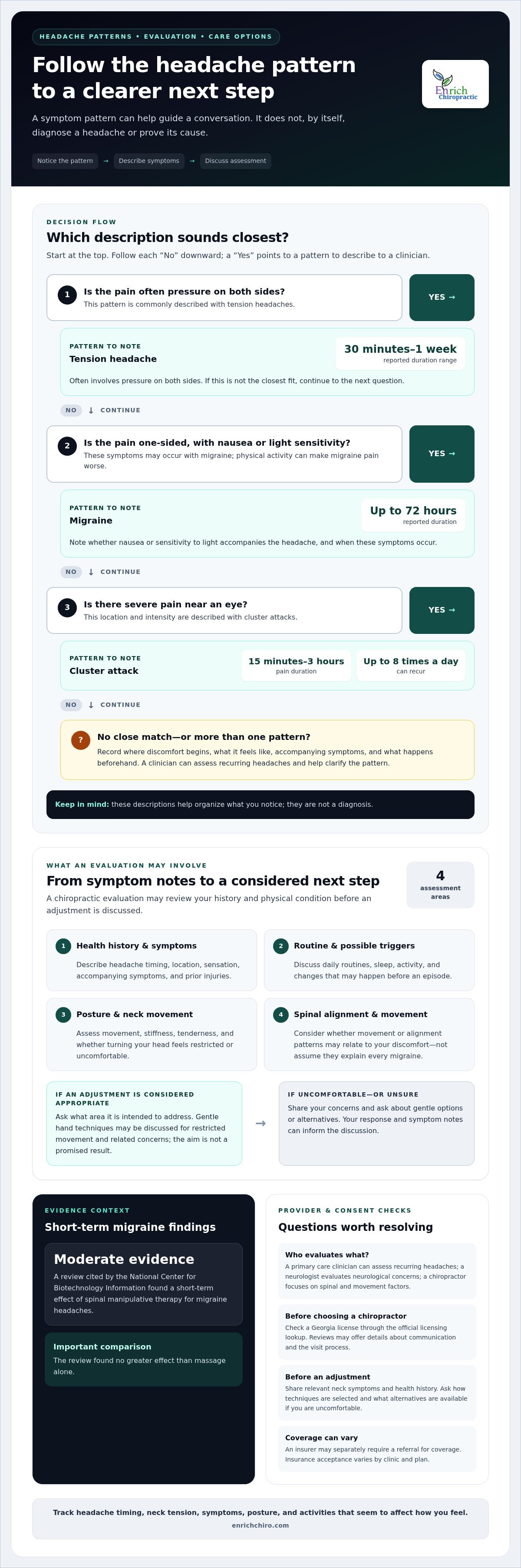
Care can include trigger review, neck-movement assessment, and gentle hand adjustments. Tension headaches often cause pressure on both sides and last from 30 minutes to a week. Migraine pain may be one-sided, with nausea or light sensitivity, and last up to 72 hours. Cluster attacks cause severe pain near an eye; pain lasts 15 minutes to 3 hours and can recur 8 times a day. The National Center for Biotechnology Information found moderate evidence of short-term benefit from spinal manipulative therapy for migraine, but no greater effect than massage alone.
Proposed Structural Causes
One proposed explanation links some headaches with strain or restricted movement in the neck and upper back. Trauma or poor posture can aggravate head and neck muscles and tendons, potentially contributing to discomfort. An assessment can look at posture, movement, and spinal alignment for patterns that may matter. These structural factors are possibilities to assess, not proof that misalignment causes every migraine.
Choosing a Provider and Checking Credentials
A primary care clinician can assess recurring headaches, while a neurologist evaluates neurological concerns and a chiropractor focuses on spinal and movement factors. You can discuss a chiropractic appointment directly, though an insurer may separately require a referral for coverage. Insurance acceptance varies by clinic and plan, so review your benefits before booking.
Check a Marietta chiropractor’s license through Georgia’s official licensing lookup, then read patient reviews for details about communication and the visit process. Neck-adjustment risks depend on health history and technique. Share relevant neck symptoms and ask about gentle options before consenting. Before booking, ask what the evaluation involves, how adjustments are selected, and what alternatives are available if you’re uncomfortable.
Chiropractic evaluation and treatment
A headache evaluation starts with your history, daily routine, and physical condition. The pattern matters: note where pain begins, what it feels like, and what happens beforehand. For example, record whether neck tension or a change in sleep comes before an episode. These details help identify possible triggers and guide a focused physical assessment.
An initial assessment may include several practical steps:
Review your medical history and describe your headache symptoms.
Discuss lifestyle factors, including sleep, activity, and common routines.
Assess posture, neck movement, and areas of stiffness or tenderness.
Consider whether spinal alignment and movement may relate to your discomfort.
These steps help identify issues that may affect the head and neck while keeping the evaluation focused on you. Share changes in your symptoms and any prior injuries to provide useful context. A clear explanation of the findings can help you understand why a particular approach is being considered.
If an adjustment is appropriate, a chiropractor may use gentle hand techniques to address restricted movement and related concerns. The aim is to improve movement and reduce headache discomfort, not to promise a particular result. Ask what area the adjustment is intended to address, and describe any discomfort during the process. Your response can guide how the technique is applied.
Care should connect the assessment to a practical next step. That may mean discussing an adjustment, tracking symptoms, or reviewing possible triggers. A headache treatment approach can include an evaluation followed by a standard chiropractic adjustment. Keep notes about headache patterns between visits, such as timing, neck tension, and activities that seem to affect symptoms. This gives future discussions concrete details to work with.
Atlas misalignment
The atlas is the uppermost vertebra in the neck. Some chiropractic approaches consider its position when assessing head and neck discomfort. “Atlas misalignment” describes a proposed structural factor, not a complete explanation for migraine symptoms. Neck position is one part of a broader picture that includes symptom patterns, posture, and movement.
An atlas-focused assessment considers how comfortably your neck moves and whether posture affects that movement. For example, note whether turning your head feels restricted or brings on neck tension. Share those observations alongside when headaches occur and what symptoms accompany them. This gives the practitioner specific details to consider rather than relying on the label of misalignment alone.
Migraine symptoms can include nausea and sensitivity to light, and physical activity can make pain worse. Describe these experiences even if you also have neck discomfort. Keep a simple record of:
Where head or neck discomfort begins.
Whether neck movement feels limited or uncomfortable.
When nausea or light sensitivity occurs with a headache.
Activities or posture changes that seem to affect symptoms.
This record helps distinguish a recurring symptom pattern from a single neck-related complaint. It also gives a chiropractor concrete examples to discuss during an evaluation. An adjustment should be considered in light of the findings, not simply because the atlas is named as a possible factor.
Atlas alignment alone does not establish why someone has migraines. A useful discussion connects neck movement and posture with the full set of symptoms, including nausea and light sensitivity. Ask what the assessment found, how it relates to your reported discomfort, and what the proposed adjustment is intended to address. Clear answers keep the conversation focused on your experience rather than an assumed cause.
Which chiropractors in Marietta, Georgia treat patients with migraines?
In Marietta, look for a migraine chiropractor in Marietta who assesses headache symptoms before considering adjustments. A useful first visit should make room for your migraine history, current symptoms, neck movement, and posture. The practitioner should explain how these findings inform any proposed technique. That gives you a clearer basis for deciding whether chiropractic care fits your needs.
Use the first conversation to understand the approach, rather than assume every migraine has the same cause. For example, describe whether neck tension occurs with your headaches, whether movement feels restricted, and whether nausea or light sensitivity accompanies the pain. Ask how these details shape the assessment. Clear, specific answers help you understand what the chiropractor is considering and why.
Before booking, prepare a short list of questions:
Does the visit include a headache-focused evaluation?
How are posture and neck movement assessed?
What findings would lead you to recommend an adjustment?
Can I discuss a gentler approach if I feel uneasy about a technique?
These questions focus on the process, not a promised outcome. A chiropractor should be able to explain the purpose of an adjustment in plain language and describe how your symptoms relate to the examination. If the explanation doesn’t address your concerns, ask for clarification before proceeding. Your comfort and understanding matter at each step.
Bring a brief symptom record to your appointment. Note when headaches occur, what symptoms accompany them, and whether neck movement or posture seems relevant. Specific examples can make the evaluation more useful than a general description. A migraine chiropractor in Marietta can use these details to guide a focused discussion. If you’re ready to discuss headache care in Marietta, schedule a first visit and share what you’ve been experiencing.
Enrich Chiropractic: First visit consultation and adjustment
Enrich Chiropractic offers a first-visit consultation and adjustment for people seeking hands-on care for headache discomfort. You can describe your migraine pattern, neck tension, and concerns before discussing an adjustment. If neck stiffness accompanies your headaches, neck pain and tension care may also be relevant.
A standard chiropractic adjustment is another option at the clinic. Your symptoms and the evaluation shape the conversation about whether an adjustment suits your needs. Bring a brief record of headache timing, related symptoms, and anything that seems to affect them. Clear details can help you discuss your concerns and understand the proposed next step.
If you’d like to discuss headache care, visit enrichchiro.com.
Choose a Next Step That Feels Right
Headache care works best as a clear conversation about your needs and priorities. If you’re considering a migraine chiropractor in Marietta, ask what an evaluation involves and how an adjustment would relate to your symptoms. That discussion can help you decide whether chiropractic care belongs in your approach.
Enrich Chiropractic offers a first-visit consultation and adjustment, standard chiropractic adjustments, and back pain care. The first visit gives you space to discuss what you’re experiencing and understand the next step before proceeding. If headache discomfort overlaps with back or neck tension, explain how those concerns affect your daily activities.
There’s no need to have every detail figured out before starting a conversation. A straightforward discussion can help you weigh your options and decide what feels appropriate. Contact Enrich Chiropractic to discuss a first visit and take your next step at your own pace.
Frequently Asked Questions
Are there other drug-free ways to reduce head discomfort?
Yes. Tracking possible triggers can help you notice patterns without adding medication. Record sleep changes, environmental stimuli, exercise, and meals alongside headache symptoms. Insomnia, excessive exercise, and blood sugar changes are among the possible factors associated with headaches. Start by noting what happened before an episode, then discuss recurring patterns during a healthcare visit.
How will I be assessed?
An assessment can consider your headache history, lifestyle, and physical condition. Before your visit, write down when discomfort begins, what symptoms accompany it, and how it affects ordinary activities such as reading or walking. Include relevant health history and any recent changes. This gives the practitioner concrete context for discussing your concerns and deciding what parts of your physical condition deserve attention.
Struggling with Headaches in Marietta GA?
Marietta residents can explore headache care with Enrich Chiropractic in nearby Kennesaw. The clinic serves Kennesaw, Marietta, Acworth, Woodstock, and nearby areas, including patients near Kennesaw State University. Dr. Rich provides one-on-one care. If headaches are affecting your day, note the symptoms you want to discuss and book a first-visit consultation and adjustment. It’s a local way to talk through your concerns and available chiropractic care.
What migraine treatments do Marietta chiropractors offer?
Chiropractic care for headache discomfort may include an evaluation followed by a standard adjustment, with techniques selected in relation to the person’s symptoms and movement. Enrich Chiropractic offers headache treatment and chiropractic adjustments. Before care begins, describe what you hope to address, such as recurring head discomfort or accompanying neck tension. That helps keep the conversation focused on your needs and the proposed approach.
What evidence supports chiropractic care for migraine relief?
The National Center for Biotechnology Information reports that a review found moderate evidence of a short-term effect from spinal manipulative therapy for migraine headaches. The review also found no greater effect than massage alone. The National Center for Biotechnology Information reports that a review found moderate evidence of a short-term effect from spinal manipulative therapy for migraine, but no greater effect than massage alone.



Comments