


Relief for Lower Back Stiffness: 3 Simple Ways to Move More Comfortably

What if the best first step toward relief for lower back stiffness is gentle movement, not staying still? When bending, standing, or getting out of bed feels uncomfortable, it’s understandable to move less. But long periods of rest can make it harder to loosen up. Choose movements that feel manageable, and ease into them without forcing through pain.
This guide covers three ways to move more comfortably, practical adjustments to your daily routine, and signs that mean you should pause home care and seek medical attention. Small, steady steps can help you stay active while paying attention to how your body responds.
If stiffness keeps returning or starts limiting everyday activities, professional guidance can help you decide what to try next. Enrich Chiropractic in Kennesaw provides one-on-one care for back stiffness and mobility, with individual visits and no long-term treatment plans. The first visit consultation and adjustment is $60, and subsequent adjustments are $35. Care is personalized, without pressure or promises of a specific result.
Table of Contents
What lower back stiffness feels like, and what simple relief can realistically do
Lower back stiffness is a feeling of tightness or reduced ease of movement around the lower back. You might find it harder to bend, turn, or stand upright, even if the sensation isn’t sharply painful. A concise way to describe it is: stiffness is restricted or uncomfortable movement, not a diagnosis. Sharp pain, pain that travels into a leg, or symptoms that are worsening are different experiences and deserve attention in their own right.
Stiffness can have different causes, and how it feels doesn’t identify the cause on its own. It may occur alongside low back pain, a broad topic with different patterns and possible contributors, as outlined in Low back pain. Gentle self-care may ease everyday tightness and help you move more comfortably, but it can’t determine what’s behind persistent or concerning symptoms.
Pay attention to your own pattern rather than trying to label it. Notice when stiffness appears, which movements feel easier or harder, and whether your comfort changes during the day. These details can help you choose sensible next steps and explain what’s happening if you seek professional guidance.
How lower back stiffness can affect everyday movement
You may feel tight after sitting for a while, move cautiously as you stand, or find that bending to get dressed takes more effort than usual. The experience varies from person to person. Feeling stiffer after rest, for example, doesn’t prove a specific condition or explain its cause.
Instead, observe how ordinary activities affect your comfort and range of motion. Does changing position feel easier? Does a particular movement bring on sharp pain? These details can help you avoid movements that aggravate symptoms and describe the problem clearly to a clinician.
When a gentle home approach may be reasonable
If your stiffness is mild and you don’t have severe, rapidly worsening, or unusual symptoms, gentle movement and small adjustments to your routine may be reasonable to try. Keep the effort comfortable. You don’t need to push through pain, and you shouldn’t force a movement that feels wrong for you.
Stop if an activity causes sharp pain or brings on new symptoms. Home care is not a substitute for assessment if stiffness persists, interferes with daily activities, or concerns you. The next sections cover gentle options and signs that call for professional attention.
3 Gentle ways to relieve lower back stiffness at home
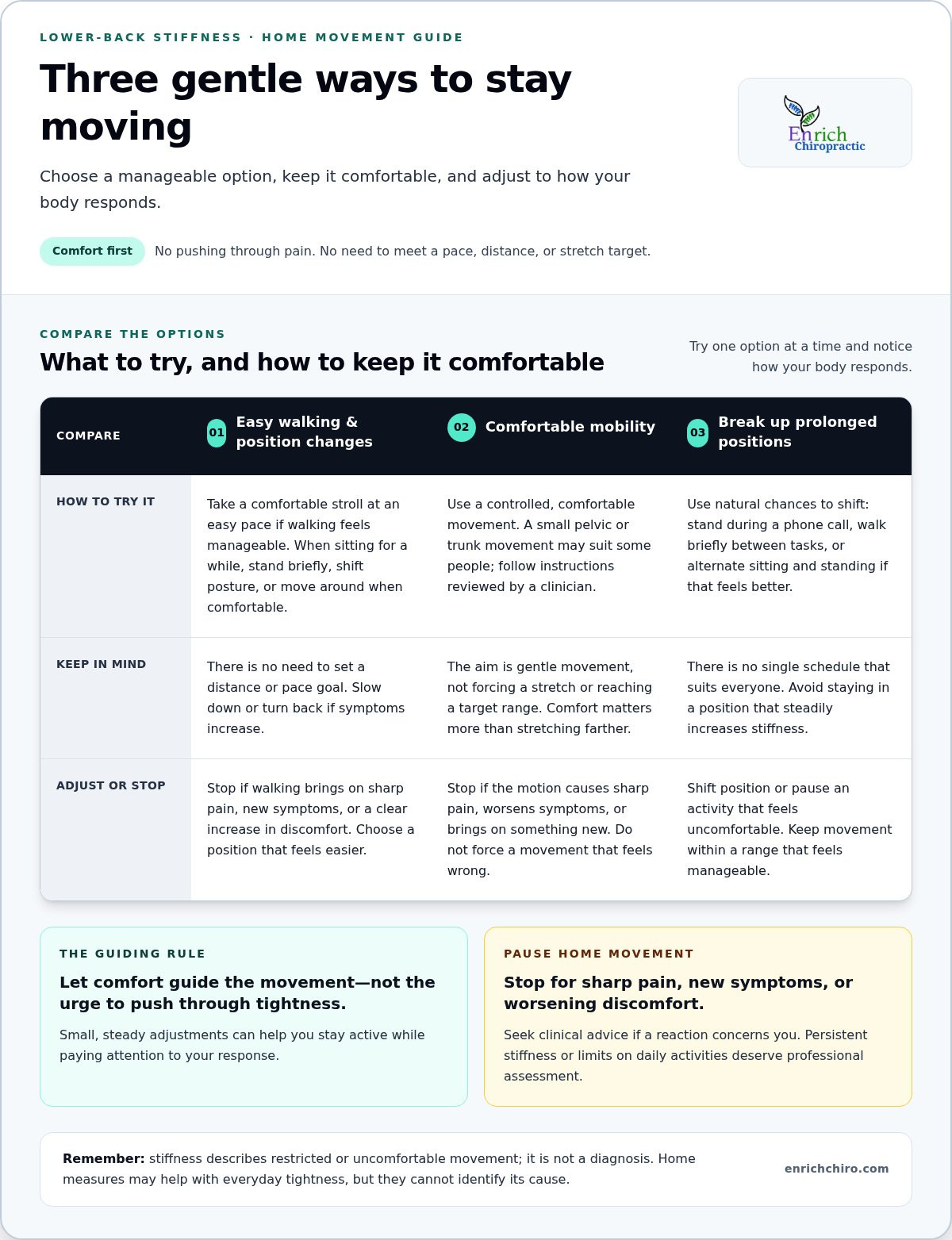
Start small and let comfort guide you. The aim isn’t to push through tightness or achieve a deep stretch. Try one option at a time, stay within a comfortable range, and notice how your body responds. These approaches may help with everyday stiffness, but they can’t diagnose its cause.
Start with easy walking and frequent position changes
If walking feels manageable, take a comfortable stroll at an easy pace. Keep it gentle, and slow down or turn back if your symptoms increase. If you spend much of the day sitting, change position regularly. Stand briefly, shift your posture, or move around when it feels comfortable rather than staying still for long stretches.
There’s no need to meet a distance or pace goal. If walking brings on sharp pain, new symptoms, or a clear increase in discomfort, stop and choose a position that feels easier. Seek clinical advice if the reaction concerns you.
Try comfortable mobility without forcing a stretch
Gentle mobility means moving in a controlled, comfortable way, not forcing your back into a stretch. A pelvic or trunk movement may suit some people, but the right motion depends on your symptoms and comfort. Follow instructions reviewed by a clinician, and keep the movement small enough that it doesn’t trigger pain. For more on movement and flexibility, see this guide to improving your range of motion.
Don’t compete with a target range or compare your movement with someone else’s. Stop if the motion causes sharp pain, makes symptoms worse, or brings on something new. Comfort matters more than stretching as far as possible.
Break up prolonged positions
Long periods in one position can make movement feel less comfortable. Build in natural chances to shift: stand during a phone call, walk briefly between tasks, or alternate sitting and standing if that feels better. There’s no single schedule that suits everyone. Aim to avoid staying in a position that steadily increases stiffness.
Easy walking, comfortable mobility, and regular position changes offer three gentle ways to stay moving and test what feels manageable. For relief for lower back stiffness, adjust your approach to your response rather than pushing through. If stiffness persists or limits daily activities, one-on-one stiffness and mobility care at Enrich Chiropractic can help you discuss next steps at a comfortable pace.
Choose the right approach: movement, heat, rest, and pacing
There isn’t one comfort measure that suits everyone. Gentle movement may help you stay active, while brief rest or heat may feel better in the moment. Use these options as general comfort measures, not as a diagnosis or personalized medical advice. NICE recommends supporting people with low back pain to self-manage and continue normal activities where possible. That doesn’t mean pushing through pain.
How to pace movement without pushing through pain
Make small changes rather than jumping straight into demanding exercise. You might move around the room or return to a familiar daily task at an easier pace. Notice what increases or eases stiffness, then use that information to adjust your activity. A simple note about what you did and how you felt afterward can help you spot patterns. Don’t push through sharp, spreading, or worsening pain.
When heat or a short rest may feel more comfortable
People respond differently to movement and heat. If warmth feels soothing, use a suitable heat product according to its directions. Avoid excessive temperatures and prolonged direct contact with skin. A short pause can also help you settle discomfort, but try not to let brief rest turn into extended inactivity if gentle movement remains comfortable. Stop any approach that worsens symptoms.
For relief for lower back stiffness, aim for a flexible balance: move gently when it feels manageable, pause when needed, and change positions before discomfort builds. If symptoms persist or you’re unsure what’s appropriate for you, personalized lower back pain care can help you discuss options that take your symptoms and comfort into account.
Know when lower back stiffness needs more than home relief
Home care is for mild symptoms that remain manageable. It isn’t the right response to every change in how your back feels. Some symptoms need prompt medical attention, while stiffness that persists or interferes with daily life deserves a routine professional assessment. If you’re unsure which applies, seek advice from a qualified clinician rather than relying on a home routine.
Warning signs that should not wait for a home routine
New bladder or bowel control problems, numbness around the groin or saddle area, or worsening leg weakness need urgent medical evaluation. Don’t wait to see whether movement, heat, or rest helps. Seek emergency medical care for these symptoms. They may have serious causes that require prompt assessment, and a chiropractic visit is not a substitute for emergency evaluation.
Get prompt medical attention for back symptoms after significant trauma, or when they come with fever, severe pain, or pain that is rapidly getting worse. Unexplained weight loss alongside back symptoms is also a reason to contact a clinician promptly. These signs don’t establish a diagnosis, but they shouldn’t be managed with home care alone.
When ongoing stiffness deserves a professional assessment
Arrange an assessment if stiffness lasts more than a few weeks despite home care, keeps returning, limits everyday activities, or worries you. You don’t need to wait for symptoms to become severe. A clinician can consider your symptoms and movement, then help you understand an appropriate next step without promising a particular result.
If stiffness comes with pain traveling into a leg, share where it travels and whether you notice changes in strength or sensation. Information about chiropractic care for sciatica may be relevant for radiating leg symptoms, but seek urgent evaluation first if you have progressive weakness or numbness around the saddle area.
New bladder or bowel control problems, saddle-area numbness, or progressive leg weakness require urgent medical evaluation, not a home relief routine. For persistent stiffness without urgent warning signs, professional guidance can help clarify your options. Enrich Chiropractic provides one-on-one back stiffness and mobility care in Kennesaw, with visits offered individually and no long-term treatment plans. To discuss ongoing stiffness, book a one-on-one visit.
Personalized lower back stiffness care in Kennesaw: practical next steps
If stiffness keeps interfering with bending, standing, or everyday tasks, a one-on-one assessment can help you consider what to do next. At Enrich Chiropractic in Kennesaw, Dr. Rich provides individual care for back discomfort and stiffness. The visit takes your symptoms, movement, and comfort level into account. Care is provided per visit, without a required long-term treatment plan or a promise of a particular result.
What a straightforward chiropractic visit may involve
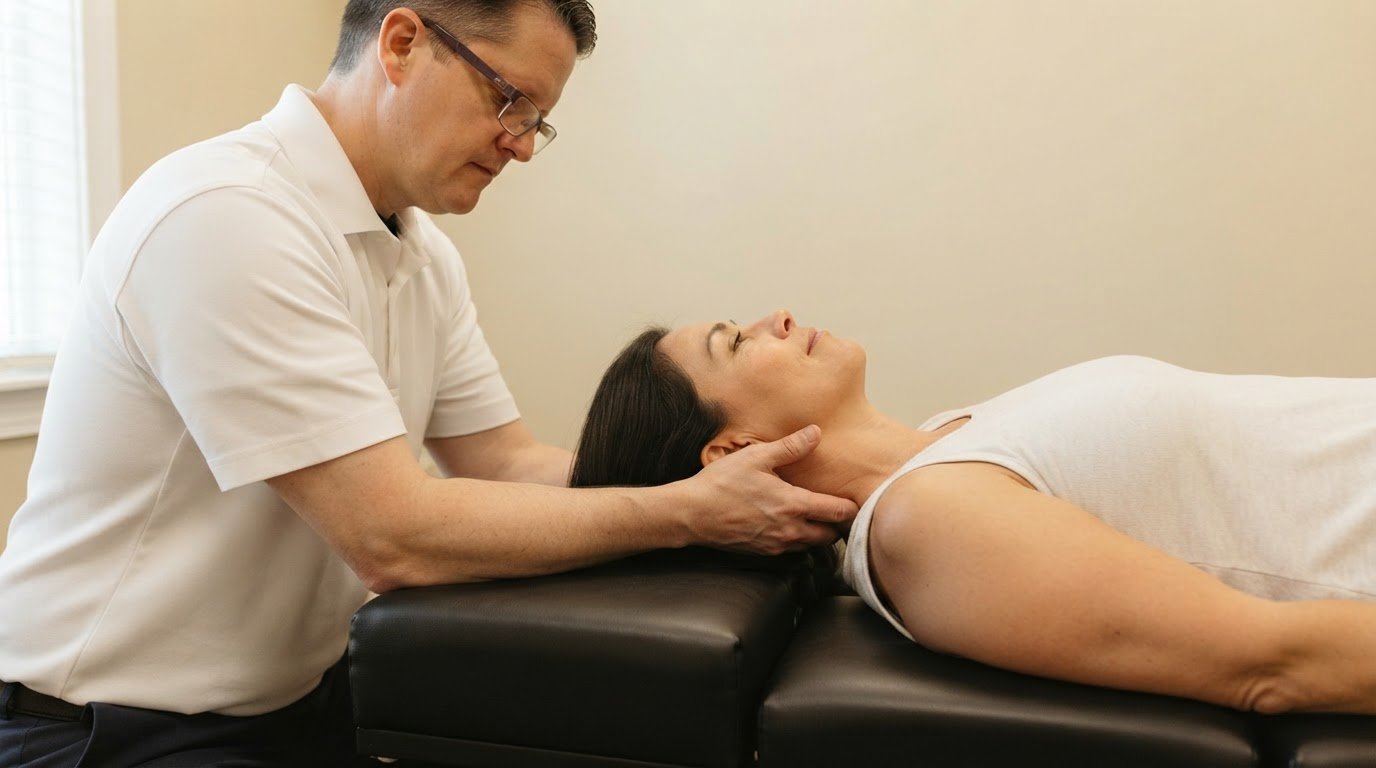
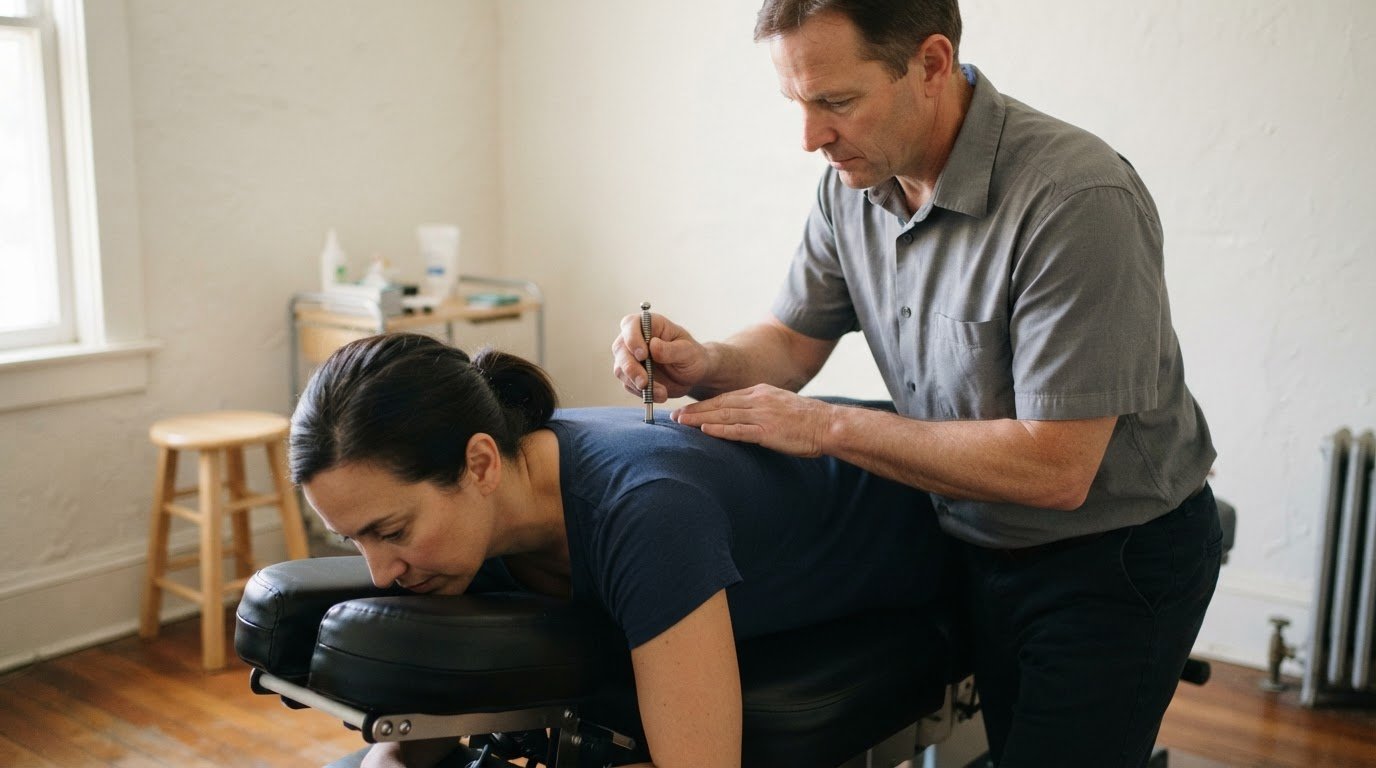
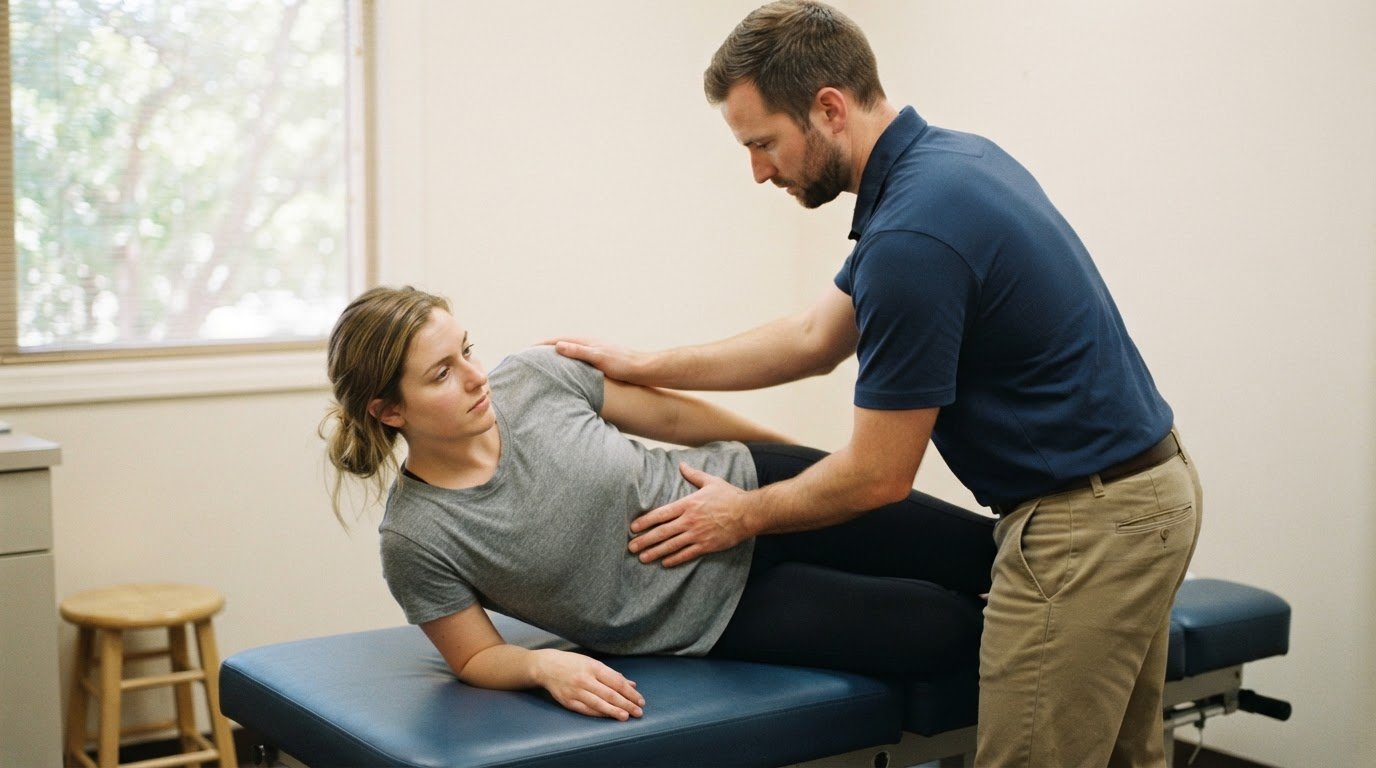
A first visit includes a conversation about what you’re feeling and how it affects daily movement, followed by a consultation and adjustment. You can describe which activities feel difficult and what you’ve already tried. An adjustment may be part of your care, but no approach can guarantee that stiffness will disappear. Read what to expect at a first visit to prepare for the appointment.
Professional care is one option, not a commitment to a long course of visits. You can discuss your concerns, understand the suggested next step, and make decisions at your own pace. If your symptoms point to a need for urgent medical evaluation, seek that care first.
Take a low-pressure next step if stiffness persists
Consider an assessment if stiffness continues to limit daily movement, keeps returning, or leaves you unsure how to proceed. Enrich Chiropractic serves people in Kennesaw and nearby communities, including Marietta, Acworth, and Woodstock. A one-on-one visit can help clarify your options without pressure to commit to ongoing care.
For a practical next step, explore one-on-one care at Enrich Chiropractic. You can decide whether an individual visit feels right for you.
Take a comfortable next step toward easier movement
Relief for lower back stiffness can start with small, manageable choices. Try gentle movement, change positions regularly, and use heat only if it feels comfortable. Pay attention to how your back responds. Ease off if an activity causes sharp or worsening pain, and seek medical care promptly for urgent warning signs such as new bladder or bowel control problems, saddle-area numbness, or progressive leg weakness.
If stiffness keeps returning or interferes with daily activities, you don’t have to figure out the next step alone. Enrich Chiropractic offers one-on-one sessions with Dr. Rich in Kennesaw, serving nearby communities including Marietta, Acworth, and Woodstock. Care is provided per visit, without long-term treatment plans or promises of a particular result. The first visit consultation and adjustment is $60, followed by $35 per adjustment.
Book a one-on-one visit with Enrich Chiropractic to discuss your stiffness and practical next steps. Keep moving at a pace that feels comfortable, and give yourself room to find an approach that works for you.
Frequently Asked Questions
What is the fastest way to relieve lower back stiffness at home?
There isn’t one fastest method that works for everyone. If symptoms are mild and movement feels manageable, try a brief, easy walk or gently change positions. Heat may feel soothing for some people, but it isn’t a guaranteed fix. Keep activity comfortable and stop if pain becomes sharp, spreads, or worsens. Seek medical advice if symptoms persist, limit everyday movement, or concern you.
Is walking good for lower back stiffness?
Walking can be a comfortable way to keep moving when your symptoms allow it. Start at an easy pace and choose a distance that feels manageable. You don’t need to meet a step goal or push through discomfort. If walking increases your pain, causes new symptoms, or makes you feel worse, stop and seek clinical advice if needed. Changing position regularly can also help break up long periods of sitting.
Can stretching make lower back stiffness worse?
Yes. A forced or uncomfortable stretch may aggravate symptoms, and not every movement suits every person. Keep any mobility exercise gentle and controlled, and stay within a comfortable range. Don’t try to match someone else’s flexibility or push for a deeper stretch. Stop if you feel sharp pain, pain spreading into a leg, worsening symptoms, or anything new. Ask a qualified clinician for guidance if you’re unsure what movement is appropriate.
Should I use heat or rest for a stiff lower back?
Either may feel more comfortable, depending on the person and the symptoms. Heat is an optional comfort measure, not a proven fix for the cause of stiffness. Follow the product directions, avoid excessive heat, and protect your skin from prolonged direct contact. A brief rest can help you pause an aggravating activity, but extended inactivity may make it harder to return to movement. Resume gentle activity only as comfort allows.
When should I seek medical care for lower back stiffness?
Seek urgent medical evaluation for new bladder or bowel control problems, numbness around the groin or saddle area, or progressive leg weakness. Seek prompt care for severe or rapidly worsening pain, fever with back symptoms, or symptoms after significant trauma. For stiffness that persists, recurs, limits daily activities, or worries you, arrange a routine assessment. These signs don’t diagnose a cause, but they help guide how quickly to seek care.
Can a chiropractor help with lower back stiffness?
A chiropractor can assess back stiffness and discuss whether chiropractic care may be appropriate for your situation. At Enrich Chiropractic in Kennesaw, Dr. Rich provides one-on-one care that considers your symptoms, movement, and comfort. The practice serves nearby Marietta, Acworth, and Woodstock. Visits are offered individually, without long-term treatment plans. Chiropractic care isn’t a replacement for urgent medical evaluation when warning signs are present, and results can vary.
How long does lower back stiffness usually last?
There isn’t one timeline for lower back stiffness. It can vary with the cause, the person, and how symptoms change over time. Notice whether movement is getting easier, staying the same, or becoming more limited. If stiffness persists for more than a few weeks despite home care, keeps returning, or interferes with everyday activities, arrange an assessment. Seek care sooner if symptoms are severe, worsening quickly, or accompanied by urgent warning signs.
Comments